Using the easiest quilt color strategies takes the struggle over choosing fabrics for a new project. It also makes the prettiest quilts…aaaaaaand you become a confident colorist.
My easiest quilt color strategies are just in time for block of the month planning.
We’re starting a new BOM quilt in the Make Modern Triangles Club. We’ve chosen the quilt (Dutch Summer) and the next fun decision is choosing colors.
For some of us, we’re all excited butterflies about choosing colors. And then some of us, get very anxious butterflies that never sit still: the Perfection, Procrastination and Indecision species. So listen up, butterflies, your quilter is getting some color strategies today.
In this blog post, I’m walking you step-by-step through two of the easiest quilt color strategies for choosing fabrics for modern quilts. Read on to see how I quickly build exciting color palettes that will boost your color confidence when you try them. And love the quilt you make.
THIS POST IS NOT A DEEP DIVE INTO COLOR THEORY!
I’m fascinated by color theory. Every quilter wants to use color well. But…can you name five quilters who like reading color theory textbooks? Exactly. (major nerd alert – I’ve read them). No worries, we’re NOT taking a deep dive into color theory. Instead, we’re going to play with color using strategies based on color theory. I’ve distilled what I’ve learned into two strategies, especially for beginner quilters, using colors you like.
I’ll take you through the steps with different quilts to show you how.
The only notion you need is a quilters color wheel versus an artist’s color wheel. I’ve included one below for reference.
Quilters can’t mix fabrics like artists mix paint – we have to use what’s available from manufacturers or dye our own. Hence, our very own wheel. Check out this quilter’s color wheel designed by color expert Joen Wolfrom.


I also use Kona carded color swatches when I choose colors, however, you can use solid fabrics or fabrics that read like solids, ie., blenders like the Moda’s Grunge collection.

Another option is using spools of thread, skeins of embroidery thread or yarns to represent your color picks.
EASIEST QUILT COLOR Strategy 1: ONE COLOR
Big on strategy and zero luck, this one-color wonder is always a winner for beginners. A one-color palette is not a giant yawn (also known as monochromatic). It gives you so many options: palettes can be subtle, vibrant and full of contrast.
Most of my block of the month designs include a done-for-you one-color palette like the Solstice below. Even though it’s technically one color, adding in different values (lights to darks), various temperatures (warm to cool) and different saturations (bright or dull) of that one color make it sing! This is also known as gradients, which is one of my favorite ways to color quilts.
Here’s how in 4 steps using the Solstice BOM quilt as an example:

Step 1: Choose one color

Be sure to pick a favorite color!
Step 2: Add some pops and blends
The goal is to choose a continuum of very light to very dark fabrics.

This is where you look at the color wheel for shades and tints.
Step 3: Fill in the coloring sheet

This is where creativity meets color. I typically use the same colors for the same type of block to keep things flowing with gradients. For example, all of the fins in Solstice are the same light blue/green,
Step 4: Select the fabrics
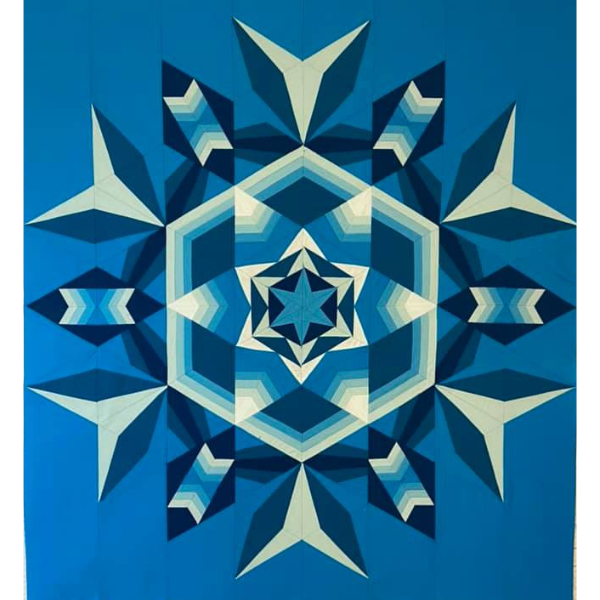

These gorgeous quilts are harmonious, full of contrast and endlessly interesting.
EASIEST QUILT COLOR Strategy 2: two COLORs
The two-color strategy has four steps and takes a wee bit longer to parse out your colors.
Here’s how in 4 steps using the Wildflower BOM quilt:

Step 1: Choose two colors

Pick colors across the color wheel from each other. That’s it!
Step 2: Add some pops and blends.

These complementary color schemes are high contrast so adding in lighter and darker colors balances out the palette.
Step 3: Fill in the coloring sheet

Two-color palettes take a little longer to complete. Think through your background colors as you will need enough contrast. If you need more contrast, add a few more options to your palette.
Step 4: Select the fabrics
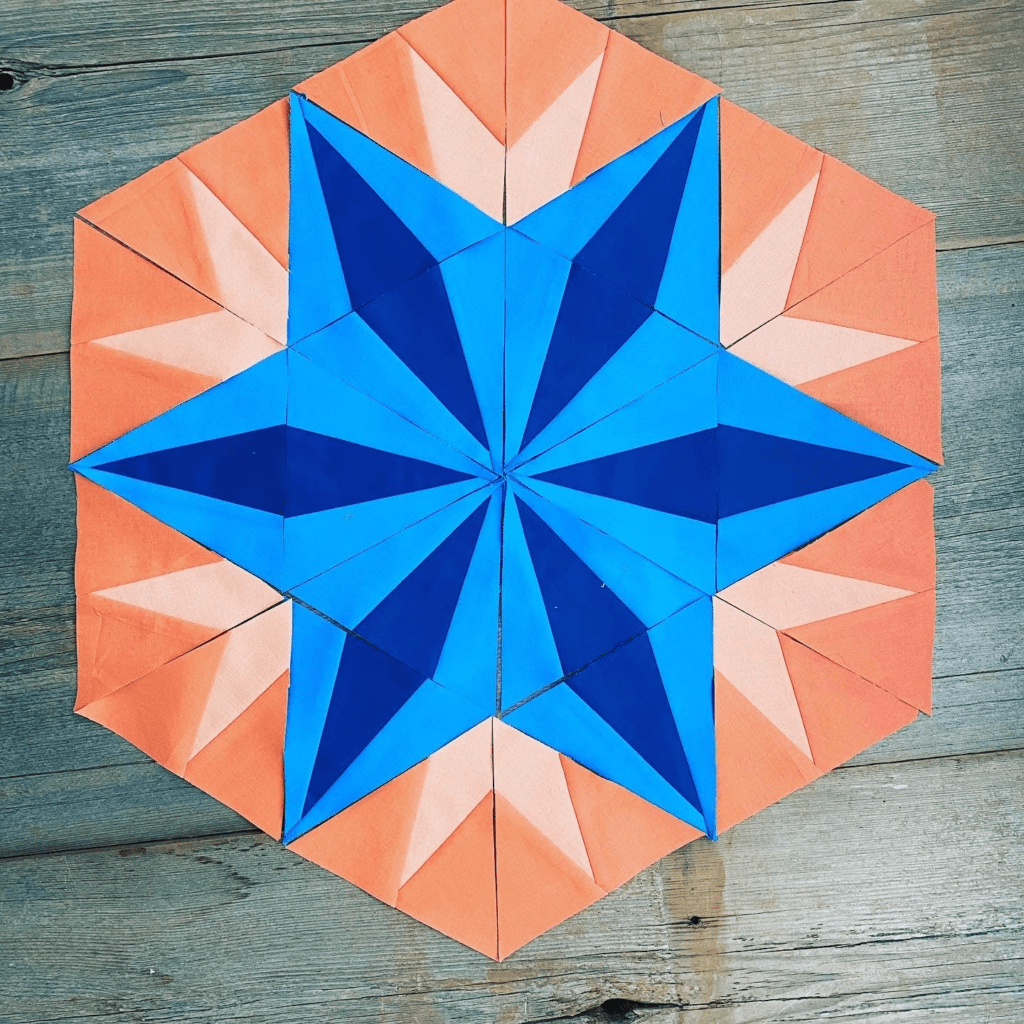
TADA!

When you’re ready to DIY your color palette, consider the one-color or two-color palette strategies. Fun, easy and always a winning combination!
For more in depth guides on choosing color palettes, click on these resources below.