Key Highlights
- Learn essential quilting terms from A to Z with helpful definitions, photos, diagrams and links to tutorials
- Quilting glossary includes terms related to fabric, quilting tools, techniques and jargon.
We’ve got answers to your quilty questions
Use my helpful glossary of quilting terms for fabric, tools, techniques and jargon to get the info you need. In this post, I’ll cover definitions for fabric, tools and techniques because quilting has a unique language. Don’t get stumped by the terms like ‘what is a self-healing mat’, ‘jelly roll’ and ’80/20 batting with scrim?’
Is it hard to find something that you’ve never SEEN before? Exactly. How about DOING something you’ve never DONE before and haven’t seen? Exactly, again. When you don’t know what you don’t know or what to call it…oooof. Your call for help is answered here!
The Importance of Quilting Terminology for Beginners
Understanding quilting terminology is essential for beginners because it’s THE foundation for understanding this extensive craft and art. Yes, oh, yes…understanding and speaking in quilt jargon is overwhelming at first, but us quilters are a friendly bunch who enjoy helping you learn. The more you understand the terminology, the more you will enjoy the experience and ask better questions. For instance, knowing the difference between “borders” and “sashing” keeps confusion at bay when reading a pattern. If quilting is completely foreign to you, speaking with native quilters will be easier with jargon and knowing what’s what: you may not know how to do it yet, but getting conversational is a big step forward.
I update this regularly with photos, diagrams and links to provide as much information as possible to scoot you forward. My quilting terms glossary is huge work-in- progress based on centuries of quilters’ efforts.
How to Use the Glossary of Quilting Terms
For starters, the top 30 quilting terms are listed first. Next, I list terms from A to Z for quick finds. Visit my Frequently Asked Questions section to see what quilters want to know most. And just to be soooo thorough, I also put the quilting terms into categories: fabric, quilting tools, techniques and jargon. Please forgive my obsessiveness in advance.
Top 30 Quilting Terms
Here are 30 essential quilting terms every beginner should know.
- Acrylic ruler: heavy, clear ruler that is ⅛ inch thick with smooth edges used for rotary cutting. Markings are typically in ⅛, ¼, ½, and 1-inch measurements in a gridded layout with optional diagonal lines indicating 30, 45 and 60 degree angles for cutting shapes.
- Appliqué: A technique where a piece of fabric is sewn on top of another fabric piece to create a design.
- Bias: The diagonal direction of fabric that provides the most stretch, often used in binding.
- Basting: A technique for Securing the three layers of a quilt together using long hand stitches or pinning with safety pins at 6-inch intervals across the quilt top. Basting prevents the layers from sliding when quilting the top, batting and backing together.
- Batting: The middle layer of a quilt, providing warmth and structure. Types of batting for quilted projects include polyester, cotton, polyester/cotton blends, bamboo and silk fibers in different sizes for small projects, baby, lap, twin, queen and king sized bed quilts.
- Binding: The folded fabric strip that encloses the raw edges on the front and back of a quilt. Get my 25 quilt binding ideas and learn how to add binding with my favorite machine quilt binding method. See diagram Parts of a Quilt.
- Block: A unit of a quilt made up of one or more pieces. The units are joined to form the entire quilt top. See diagram Parts of a Quilt.
- Chain piecing: A technique used to speed up sewing pieces together with a single line of stitching instead of sewing one pair at a time. Pairs of fabric are matched and aligned at the edges. The first pair is sewn as usual but the stitches aren’t cut after the seam is sewn. The presser foot is lifted and the second pair is positioned, then stitched. Threads are clipped between the shapes to separate them when finished sewing.
- Crosswise grain – also called WOF and weft. This grain direction is perpendicular to the selvage edge (the selvage is the finished, non-fraying edge of the fabric) and stretches.
- Curved safety pins: Used for quilt basting to secure the top, batting and backing together. The pin is slightly curved and bent to one side to make it easier to scoop up the layers. Buy size 2 (1 ½ inches long) pins to start with.
- Fat eighth: Precut fabric that measures 9 x 22 inches. The size is wider and more versatile for cutting out quilting pieces than a traditional ⅛ yard cut (4.5 x 44 inches).
- Fat quarter: A cut of fabric measuring 18 inches by 22 inches, popular for quilting projects.
- Feed dogs: Two rows of metal teeth under the needle plate that grip and move the fabric with each stitch.
- Free motion quilting: Technique that uses a free motion presser foot or darning foot with the feed dogs down to make the stitching design on the quilt top to secure all the layers. The quilt is moved under the needle in any direction.
- Jelly roll: A rolled bundle of 2.5-inch fabric strips are coordinated fabrics from a manufacturer’s collection. Using a jelly roll saves time spent cutting strips.
- Lengthwise grain: The grain consists of the long, strong threads parallel to the fabric selvage edge (the selvage is the finished, non-fraying edge of the fabric). The lengthwise grain in 100% cotton fabrics has the least stretch. It is also called the warp.
- Long arm quilting machine – A specialized machine mounted on a large frame which moves across the quilt in any direction while the quilt layers are held in place on rollers. The stitching is hand-guided by the quilter or computerized in an allover pattern, also called edge-to-edge quilting.
- Machine needles: Needles used in sewing machines that are clamped into the machine with a small screw. They are wider at the top (shank) and taper to a point. Thread moves through the groove on the back of the needle and into the eye. The needles are made in different sizes and styles. Quilters often use the Universal 80/12 size for piecing with domestic (home sewing) machines. Learn more about needle sizes and which to use for your projects at SchmetzNeedles.com and use their helpful chart.
- Presser feet (foot): A metal or plastic part that presses the fabric flat and helps guide and move it while stitching on a sewing machine. The needle stitches the fabric between an opening on the foot. Different types of presser feet are available for many functions, such as zigzag stitching, stitch in the ditch and decorative stitches.
- Pressing: Using an up-and-down motion with an iron to flatten seams and fabric, as opposed to ironing, where the iron glides all over the fabric.
- Quilt top: The uppermost layer of a quilt, usually made of pieced or appliquéd fabrics. See diagram Parts of a Quilt.
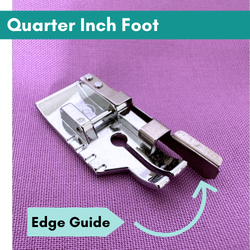
- Quarter inch quilting foot: Accuracy is everything and that’s why a presser foot with a quarter inch needle position and edge guide is recommended by quilters. The edge guide runs alongside the fabric to keep stitching an even 1/4-inch width from the edge.
- Rotary cutter: A handheld tool with a sharp circular blade used by quilters to make precise cuts through fabric. The handle is typically ergonomic and the cutters are made in different sizes – 18mm, 28mm, 45 mm and 60 mm. The most common size is 45 mm for quilting.
- Running stitch: Evenly spaced stitches which are the same length on both sides of the fabric.
- Seam ripper: A tool used to rip or unpick stitches with a curved blade that catches and cuts thread at the same time.
- Sashing: The strips of fabric that separate quilt blocks in a gridded quilt design. See diagram Parts of a Quilt.
- Seam allowance: The width of the fabric between the stitching line and the edge of the fabric.
- Stash: A collection of fabrics saved for future projects.
- Template: A pattern piece used as a guide for cutting fabric shapes.
- Walking foot: A sewing machine attachment and foot (also known as an even-feed foot) that moves the upper and lower fabrics in a synchronized motion. This prevents the fabrics fro puckering, shifting and stretching. The attachment adds a set of feed dogs on top of the fabric in addition to the feed dogs under the fabric that “bite” together to move the fabric while stitching. Using a walking foot for quilting is one of my essential tools.
Quilting Terms Dictionary A to Z
A
Acrylic ruler: Heavy, clear ruler that is ⅛ inch thick with smooth edges used for rotary cutting. Markings are typically in ⅛, ¼, ½, and 1-inch measurements in a gridded layout with optional diagonal lines indicating 30, 45 and 60 degree angles for cutting shapes.
Applique: A technique of placing a piece of fabric is sewn on top of another fabric piece to create a design. Several styles of applique are used – traditional, reverse, broderie perse and shadow – and stitched in place by hand or sewing machine. Popular hand stitches used by quilters are the blanket stitch and needle-turned applique slipstitch.
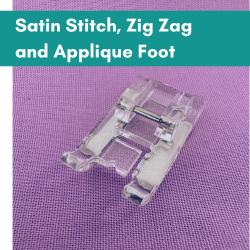
Applique foot:
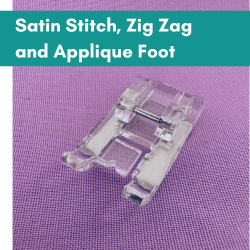 A clear presser foot with a wide slot for the needle to move through, which works with sewing satin and zigzag stitches.
B
Background – See diagram Parts of a Quilt
Basting – A technique for Securing the three layers of a quilt together using long hand stitches or pinning with safety pins at 6-inch intervals across the quilt top. Basting prevents the layers from sliding when quilting the top, batting and backing together.
Batting – The middle layer of a quilt, providing warmth and structure. Types of batting for quilted projects include polyester, cotton, polyester/cotton blends, bamboo and silk fibers in different sizes for small projects, baby, lap, twin, queen and king sized bed quilts.
Bearding – Occurs when batting fibers are pulled through the fabric by using loosely woven fabric or a dull, thick needle.
Betweens – Short, sharp needles used for hand quilting. Try #7 through #10 size betweens for this task.
Bias – The diagonal direction of fabric that stretches the most stretch.
Bias strip of fabric -cloth cut on a diagonal 45-degree angle that creates enough stretchiness to form smooth curves for applique, trim or finished edges. Strips are typically ¼ to 1-inch wide and any length.
Binding – The folded fabric strip that encloses the raw edges on the front and back of a quilt. Get my quilt binding ideas and learn how to add binding with my favorite machine quilt binding method.
Blender – Cloth that appears as a solid color with a non-directional print with texture.
Block – A unit of a quilt made up of one or more pieces. The units are joined to form the entire quilt top.
Block of the Month (BOM) – a program for quilters to make a quilt block each month and typically finish an entire quilt.
Border – See diagram Parts of a Quilt
C
Chain piecing – A technique used to speed up sewing pieces together with a single line of stitching instead of sewing one pair at a time. Pairs of fabric are matched and aligned at the edges. The first pair is sewn as usual but the stitches aren’t cut after the seam is sewn. The presser foot is lifted and the second pair is positioned, then stitched. Threads are clipped between the shapes to separate them when finished sewing.
Charm square – a 5-inch square used to make many quilt patterns. They are often sold as precuts in a charm pack.
Corner square – See Quilting Terms for Parts of a Quilt
Corner triangle – See Quilting Terms for Parts of a Quilt
Crosswise grain – This grain direction is perpendicular to the selvage edge (the selvage is the finished, non-fraying edge of the fabric) and stretches.
Curved piecing – a technique where two curved pieces of fabric are sewn together to form a curved edge, typically inside a block. Improvisational techniques often used multiple curved pieces joined together in long strips.
Curved safety pins – Used for quilt basting to secure the top, batting and backing together. The pin is slightly curved and bent to one side to make it easier to scoop up the layers. Buy size 2 (1 ½ inches long) pins to start with.
Cutting mat – A protective surface made of a sturdy, flexible material that protects the surface below it from damage by rotary cutters. Feature grid lines in inches and millimeters and angle lines – 30, 60 and 90 degrees – for quilters. They are ‘self-healing’ which means that when cuts are made into the mat, the area compresses then expands to fill the groove. Mats eventually wear out, especially if you repeatedly cut on the same grid lines.
D
Darning foot – Technique that uses a presser foot with a spring that moves up and down, allowing the fabric to slide easily in any direction while small stitches cover the cloth.
Dog ears – a tiny piece of fabric that hangs over the intersection of two pieces when stitched together, often triangles.
E
Echo stitching -lines of concentric stitches inside a shape or around a shape, usually in ¼ inch to ½ inch increments. This technique is used most often to fill in the background.
Edge to edge quilting – a method where a single, continuous design is stitched on an entire quilt top.
English Paper Piecing (EPP)
F
Fat eighth – Precut fabric that measures 9 x 22 inches. The size is wider and more versatile for cutting out quilting pieces than a traditional ⅛ yard cut (4.5 x 44 inches).
Fat quarter – A cut of fabric measuring 18 inches by 22 inches, popular for quilting projects. Quilt pattern designers often create designs that use fat quarters for the main blocks. Quilt shops sell bundles of fat quarters from a designer’s collection in harmonious colors and patterns.
Feed dogs – Two rows of metal teeth under the needle plate that grip and move the fabric with each stitch.
Finished size – refers to the dimensions of a quilt that has been quilted with binding – length and width of two sides.
Foundation paper piecing – a block-making technique that stitches pieces of fabric to a printed paper pattern.
Free motion quilting – Technique that uses a free motion quilting foot or darning foot with the feed dogs down to make the stitching design on the quilt top to secure all the layers. The quilt is moved under the needle in any direction.
Free motion quilting foot
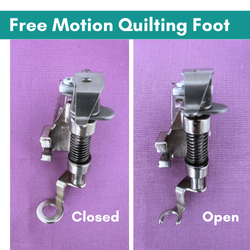 A presser foot with a closed circle or partly open circle at the bottom.
Freezer paper piecing (FPP) – a block-making technique that uses a template made from freezer paper, which is temporarily attached to the fabric. Each folded section of the template is used as a seam line.
G
H
Hand quilting
I
J
Jelly roll – A rolled bundle of 2.5-inch fabric strips are coordinated fabrics from a manufacturer’s collection. Using a jelly roll saves time spent cutting strips.
K
L
Layer cake – A bundle of precut 10-inch fabric squares containing 42 pieces from a single collection or harmonious colors.
Lengthwise grain – The grain consists of the long, strong threads parallel to the fabric’s selvage edge (the selvage is the finished, non-fraying edge of the fabric). The lengthwise grain in 100% cotton fabrics has the least stretch.
Log cabin block
Long arm quilting machine – A specialized machine mounted on a large frame which moves across the quilt in any direction while the quilt layers are held in place on rollers. The stitching is hand-guided by the quilter or computerized in an allover pattern, known as edge-to-edge quilting.
M
Machine applique
Machine needles – Needles used in sewing machines that are clamped into the machine with a small screw. They are wider at the top (shank) and taper to a point. Thread moves through the groove on the back of the needle and into the eye. The needles are made in different sizes and styles. Quilters often use the Universal 80/12 size for piecing with domestic (home sewing) machines. Learn more about needle sizes and uses at SchmetzNeedles.com and use their helpful chart.
Machine quilting – a technique that uses a domestic sewing machine or a long-arm quilting machine to sew the three layers of quilt together with a pattern of stitches.
N
Needle turn applique – hand stitching technique that stitches through the folded-under edge of a fabric shape.
O
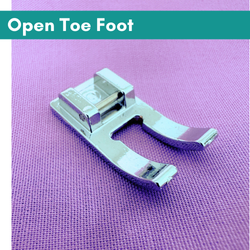
Open Toe Foot
P
Pressing – Using an up-and-down motion with an iron to flatten seams and fabric, as opposed to ironing, where the iron glides all over the fabric.
Presser foot – A metal or plastic part that presses the fabric flat and helps guide and move it while stitching on a sewing machine. The needle stitches the fabric between an opening on the foot. Different types of presser feet are available for many functions, such as zigzag stitching, stitch in the ditch and decorative stitches.
Q
Quarter inch quilting foot: Accuracy is everything and that’s why a presser foot with a quarter inch needle position and edge guide is recommended by quilters. The edge guide runs alongside the fabric to keep stitching an even width from the edge. Often, the standard foot that comes with your machine will have quarter inch guides or one “toe” provides the exact seam allowance from the needle position to the edges.
Quilt sandwich –
Quilt top – The top layer of a quilt, usually made of pieced or appliquéd fabrics that forms a design.
R
Reverse applique
Rotary cutter – A handheld cutting tool with a sharp circular blade used by quilters to make precise cuts through fabric. The handle is typically ergonomic and the cutters are made in different sizes – 18mm, 28mm, 45 mm and 60 mm. The most common size for quilting is 45 mm.
Running stitch – Evenly spaced stitches which are the same length on both sides of the fabric.
S
Sashing – The strips of fabric that separate quilt blocks in a gridded quilt design.
Seam allowance – The width of the fabric between the stitching line and the edge of the fabric
Seam ripper – An essential tool used to rip or unpick stitches with a curved blade that catches and cuts thread at the same time. We need one but we wish we didn’t!
Setting triangle – See Quilting Terms for Parts of a Quilt
Stash – Fabrics saved for future projects.
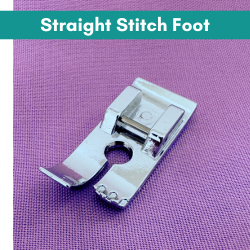
Straight stitch foot – presser foot with a small hole for the needle to pass through and more coverage over the fabric while stitching. The foot is used with a straight stitch plate that helps prevent fabrics from sliding and jamming into the needle hole.
T
Template – A pattern piece used as a guide for cutting fabric shapes.
Tone-on-tone
U
UFO
V
W
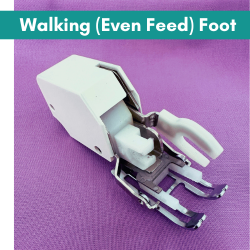
Walking foot – A sewing machine attachment and foot (also known as an even-feed foot) that moves the upper and lower fabrics in a synchronized motion. This prevents the fabrics fro puckering, shifting and stretching. The attachment adds a set of feed dogs on top of the fabric in addition to the feed dogs under the fabric that “bite” together to move the fabric while stitching. Using a walking foot for quilting is one of my essential tools.
WOF (width of fabric) – quilting cotton fabric is usually 44 inches wide, including the selvage edge. This term is often used often to describe the cutting direction for fabric strips.
Y
Z
Zig Zag Foot
Quilting Terms and Definitions by Category
Quilting terms and definitions can be divided into four categories:
- Fabric, Blocks and Design
- Techniques
- Tools and Notions
- Jargon!
Common Quilting Terms for Fabric, Blocks and Design
Quilting Terms – Getting Ready to Pick a Pattern – Know the Parts of a Quilt
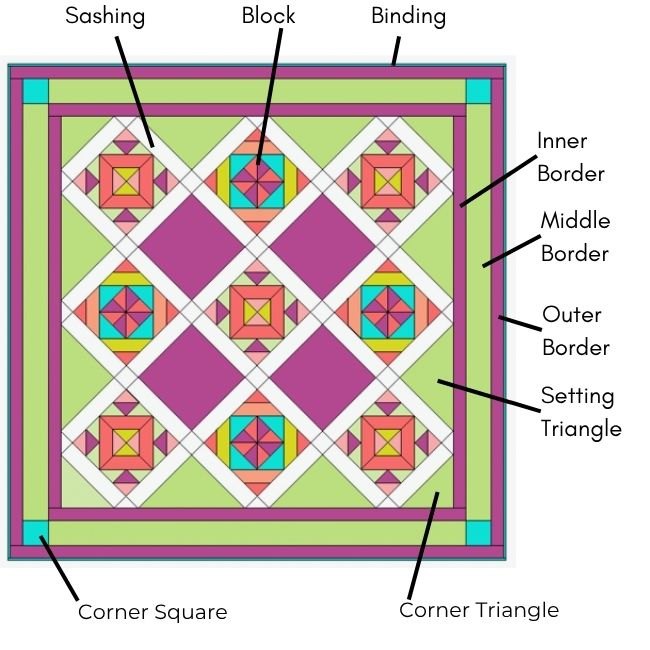
Learn the parts of a quilt before reading the pattern directions is super helpful before you tackle your first quilt, because you’ll definitely want to know the difference between sashing and borders!
Eventually, quilts won’t have all the same parts and you will get to know the block names as you make quilts.
What is premium quilting cotton that quilters swear by? It’s 100% cotton fabrics with a thread count of 60 – 68 per square inch. The weave will be tighter and the surface smoother.
What is a blender? This term is for fabric that looks (or “reads”) like a solid but has a printed texture in different shades and tints of the same color, and also known as “tone-on-tone”.
Quilting Glossary for Essential Tools for Quilting (Basic and Advanced)
Types of scissors for quilting:
- All-purpose scissors are used for everything except fabric; 8 inches is a good size to try.
- Sewing shears are reserved for cutting fabric, which prevents dulling them or getting nicked from other materials, like paper. They are available in different sizes and qualities. Bent handles lay the blades flat against the fabric for accurate cuts.
- Embroidery scissors are small (4 to 5.5 inches) with straight blades for snipping threads.
- Applique scissors are used to accurately cut fabric for small pieces and curved shapes. Different types are available, including duckbill, multi-angled blunt tip and serrated blades.
- Double curved scissors are perfect for snipping threads after free motion quilting and cutting in tight spaces.
- Rotary cutters are circular blades housed at the one end of an ergonomic handle, similar to a pizza cutter! They are made in 25, 45 and 60mm sizes.
Quilting is a Big Set of Skills
Quilting is an art form that comes with its own quilting terms and language, and understanding the terms early on is helpful for beginners. Hug the process! This is when you realize how big the quilting universe is and how far you can go! When you know the basic glossary of quilting terms, you will stitch with more confidence, less ripping and quilts you loved making.
Frequently Asked Questions about Quilting Terms and Definitions
What is the difference between piecing and quilting?
Piecing is the process of sewing small fabric pieces, or patches, together to create blocks and sections. This forms the decorative quilt top. Quilting, on the other hand, is the final step where you stitch through all three layers (top, batting, and backing) to complete the quilt. The layers include the top which is pieced, the batting in the middle and the backing fabric. In summary, piecing is about stitching fabric pieces together, whereas quilting is about joining layers to finalize the project. Quilting can also refer to the decorative stitching patterns on the top of the quilt.
What does ‘binding’ mean in quilting terminology?
Binding refers to the long strips of fabric used to finish the quilt. These strips are sewn around the raw edge of the assembled quilt layers, encasing them to create a durable and polished border. This can be done by hand or with a sewing machine for a clean finish.
What does a ‘quilt sandwich’ refer to when making a quilt?
The term ‘quilt sandwich’ refers to the three essential layers of a quilt assembled before the final quilting stitches are made. It consists of the decorative quilt top, the batting in the middle for warmth and loft, and the backing fabric. These layers of fabric are temporarily held together for stitching.
What do the terms ‘fat quarter’ and “fat eighth’ mean in quilting?
A ‘fat quarter’ is a popular cut of fabric measuring 18 by 22 inches. Unlike a standard quarter yard, which is long and thin, this “fatter” dimension is more versatile for cutting larger shapes for a quilt block pattern. It’s an excellent way to get a usable amount of fabric from a collection.
What is ‘batting’ and how it it used in a quilt project?
Batting is the middle layer of the quilt, placed inside the ‘quilt sandwich’ between the top and the backing. This material provides insulation and thickness, or loft, to the finished quilt. The amount of fabric and type of batting—such as cotton or wool—determines the warmth and drape.
Quilting Jargon for Beginner Quilters or How to Understand What Quilters Are Really Talking About!
Popular quilting acronyms include WIP, BOM, WOF, QAL, UFO, HST and HQT.
- WIP: Work in progress
- BOM: Block of the Month
- WOF: Width of fabric, referring to the crosswise width of quilting cotton which is typically 44 inches wide.
- QAL: Quilt-along
- UFO: Unfinished objects
- HST: Half square triangle
- HQT: Half quarter triangle
- EPP: English paper piecing
- E2E: Edge-to-edge
- FPP: Foundation paper piecing and freezer paper piecing.