Radial design quilts have huge dazzle potential. Learn more about working with these designs, especially using symmetrical radial balance, and make beautiful quilts. I’ve got plenty of inspiration from our Make Modern Triangles members below.
Key Highlights
- Radial design quilts use the principles of balance and symmetry to create stunning and visually appealing quilts.
- There are four types of visual balance – asymmetrical, symmetrical, radial, and crystallographic.
- Radial designs are found in historical and modern quilt designs.
- Four elements are used in symmetrical radial designs – shapes, color, repetition and focal points.
- Perfecting radial balance in quilting involves balancing color with value, temperature and placement.
Introduction
In this blog, I’m sharing how radial design principles work in quilts, and how to create visual balance with color, shapes and placement.
Many of my modern triangle quilt designs use symmetrical radial design, the coolest kind of radial design. In this post, learn techniques to balance all of the elements, especially color, shapes and placement.
I used three rings of hexies in Huckleberry below – they radiate around the quilted center circle in Huckleberry. Notice how the hexies are spaced equally apart in each ring, creating a mirror image any way you look at it. But circles aren’t they only way to fly with radial design – more on that below.

Understanding Radial Design in Quilts
Why do we love them? Besides mesmerizing movement, they do four things really, really well.
First, balance and harmony are easy on the eyes. Circles and circular designs feel complete and whole which in turn, create harmony.
Second, lines and shapes radiate out from a center point with repeating patterns – our brains love patterns and seek to find them. Even different shapes mixed together work when they radiate out from the center point.
Third, primary and secondary focal points move our eyes around the quilt. Focal points can be colors, textures, machine stitching and shapes. Focal points are also created by sets of blocks that repeat as they move around the center.
Fourth, the designs can be circular or square (surprise!) as long as there is a central point.
Radial symmetry, my personal favorite, is an arrangement of elements around a central point that mirror each other and repeat throughout the design. Repetition is key.
I use mostly triangles to make larger or paired ones, and mix in hexagons and squares. The Noelle version of Solstice is all triangles.
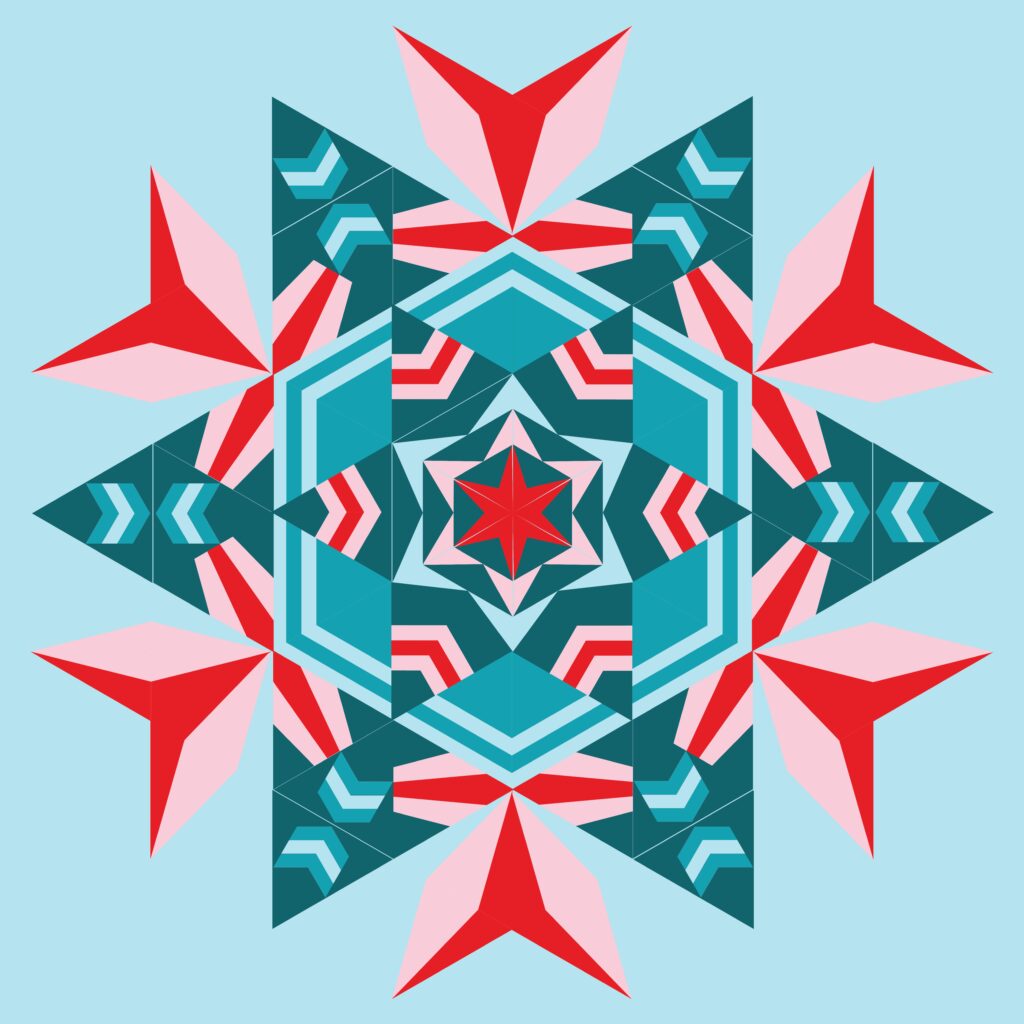
Radial composition, on the other hand, focuses on the placement of elements within the quilt – focal point, shapes and colors.
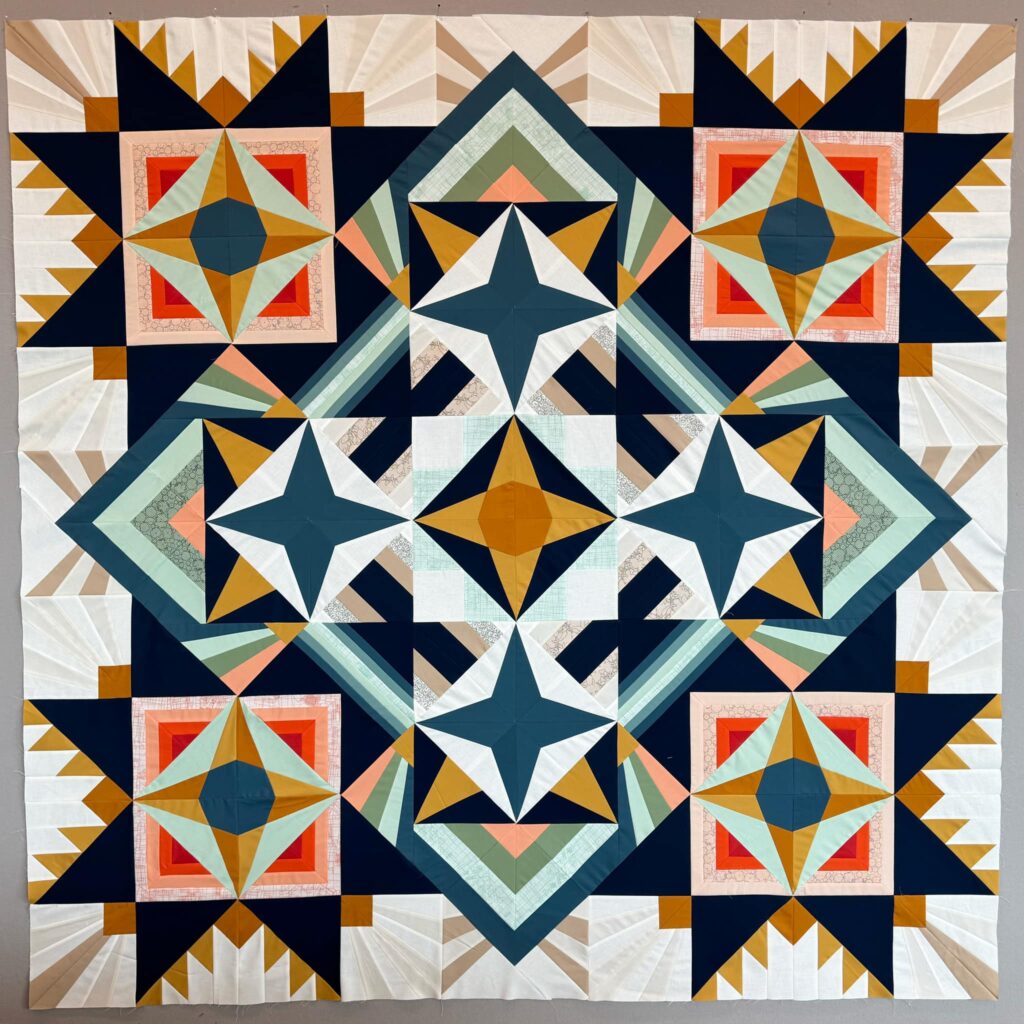
Sparkler is good example of mixing the elements together in a balanced way. Erin Andrews’ version has it all: lines, squares, triangles, diamonds balanced by her interesting color choices.
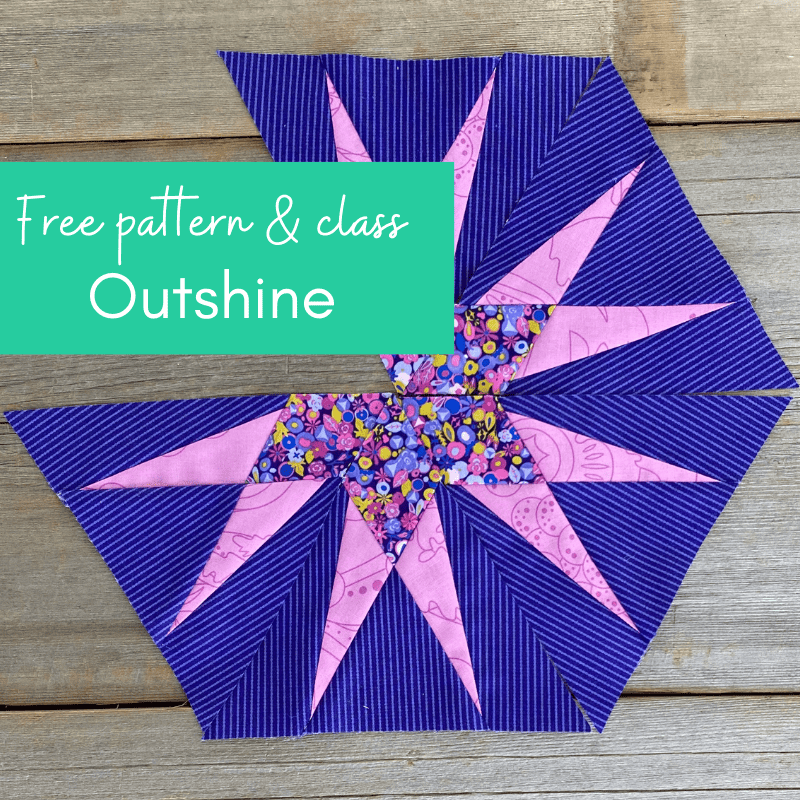
BTW, My Free OUTSHINE BLOCK is REALLY RADIAL
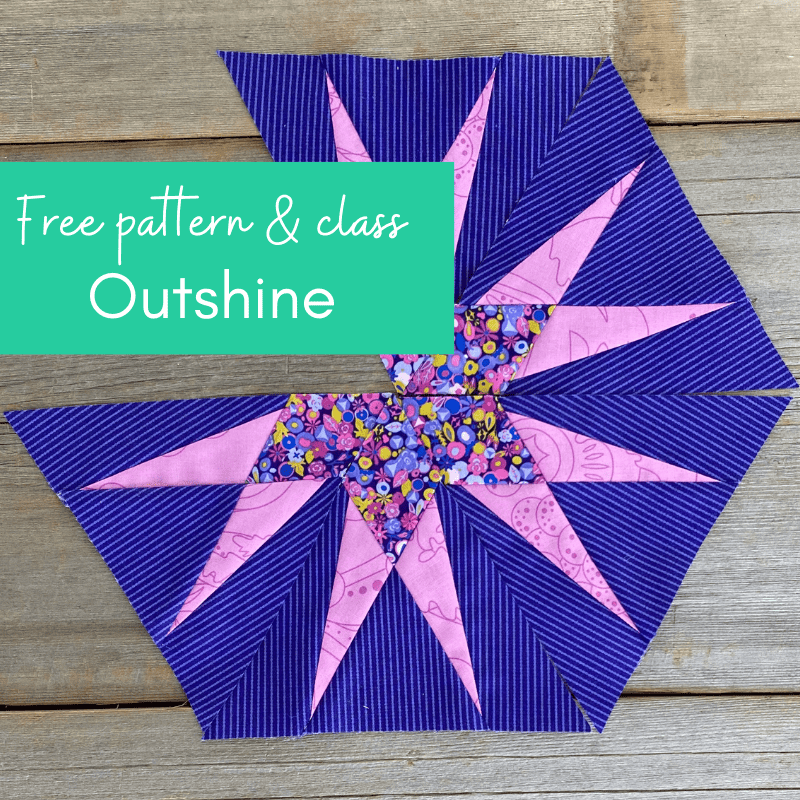
Modern triangles are so versatile when it comes to radial designs. Learn how to make Outshine with a free block pattern and tutorial.
4 Types of Visual Balance
Visual balance is an essential element in quilt design. When it’s missing, you know it. While I’m focusing on radial symmetry designs in this post, it’s good to know the four types of visual balance for all of your quilting:
- Asymmetrical balance: Elements in different shapes and sizes are often placed off center and balanced by colors and negative space. The colors may have different visual weights – like balancing a seesaw with different weights on each side.
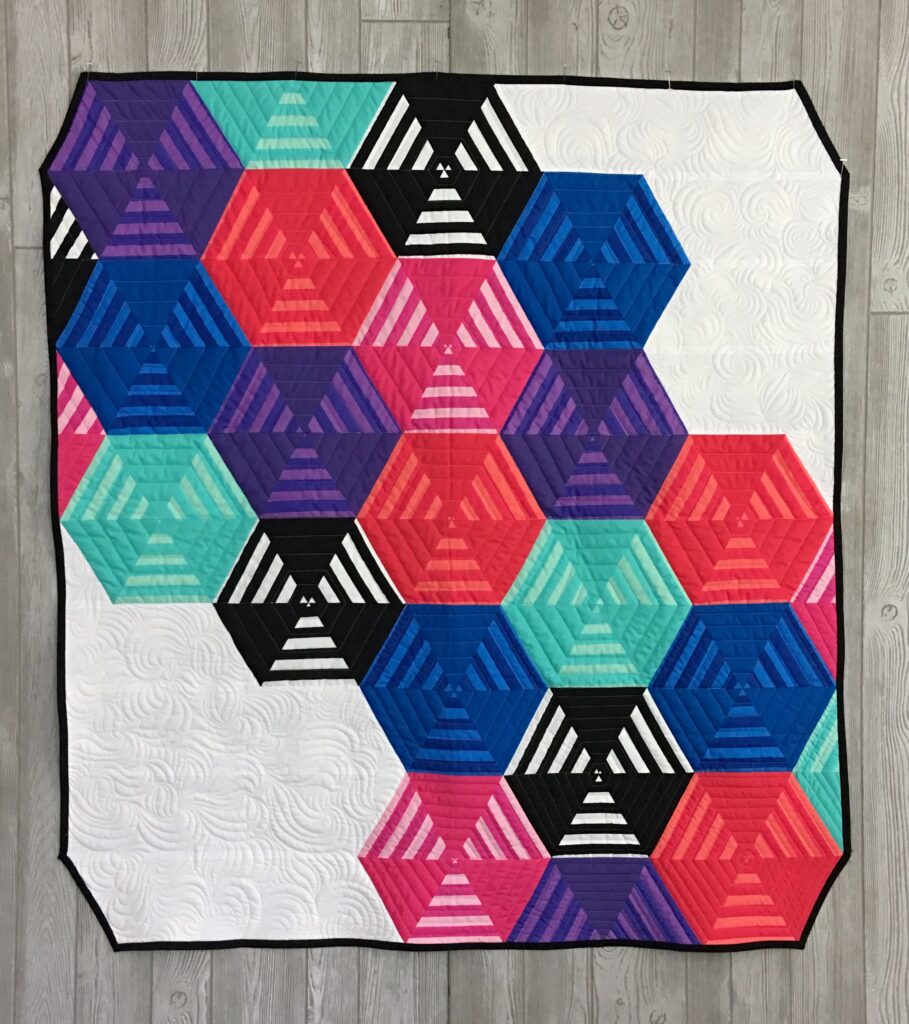
- Symmetrical balance: Symmetry is a key principle in design and the most commonly used in quilts. it involves aligning elements vertically or horizontally. Shapes, colors and patterns repeat throughout the design. There may not be a clear focal point or several.
Wildflower BOM below is an example of symmetrical radial balance.
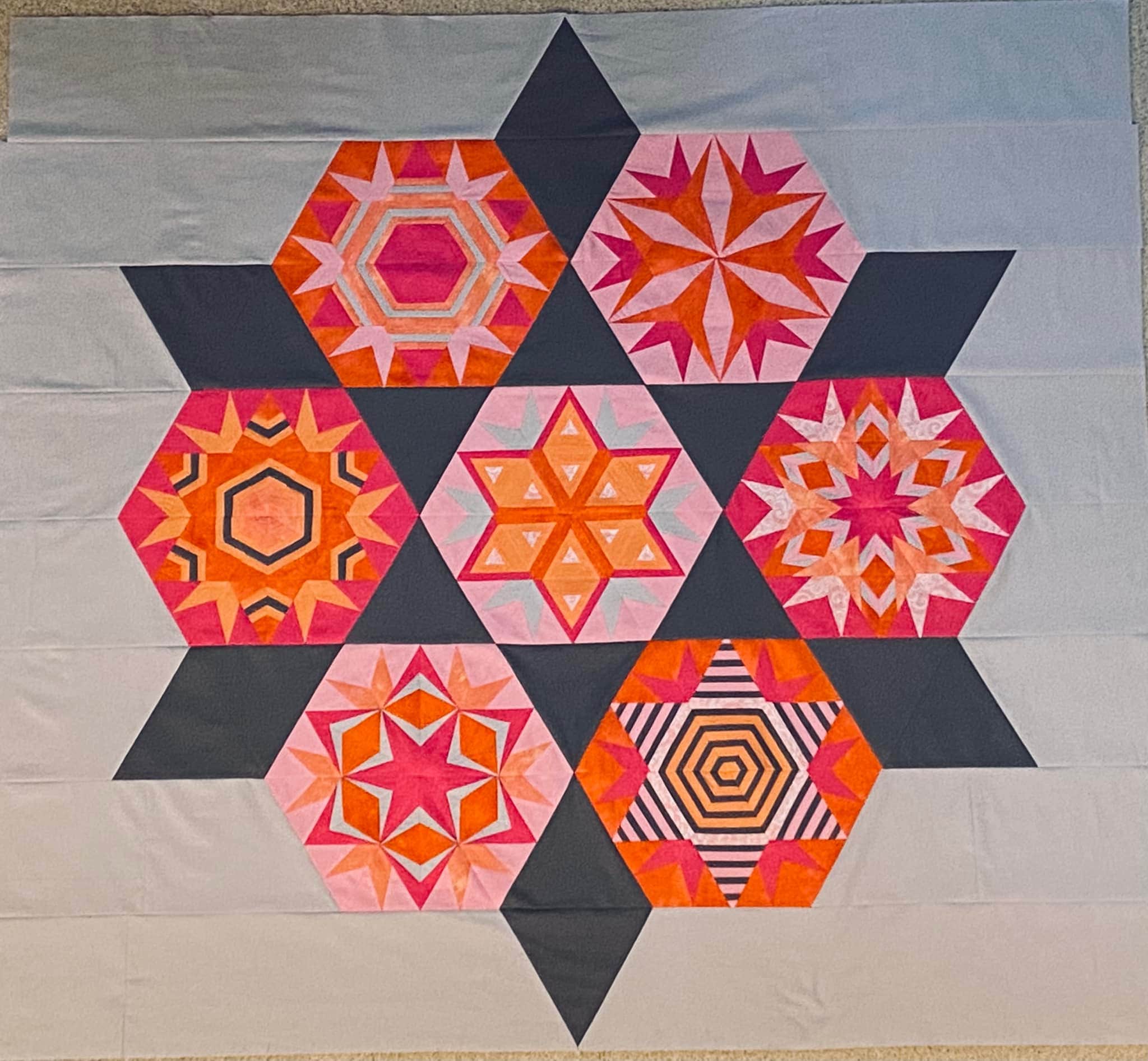
- Radial balance: Elements are aligned vertically, horizontally and diagonally. The center is the focal point while the other elements radiate outward like sun rays. Quilt designers may use concentric circles and radiating lines and shapes. Notice how the circles are spaced equidistant in their rings. Balancing act!

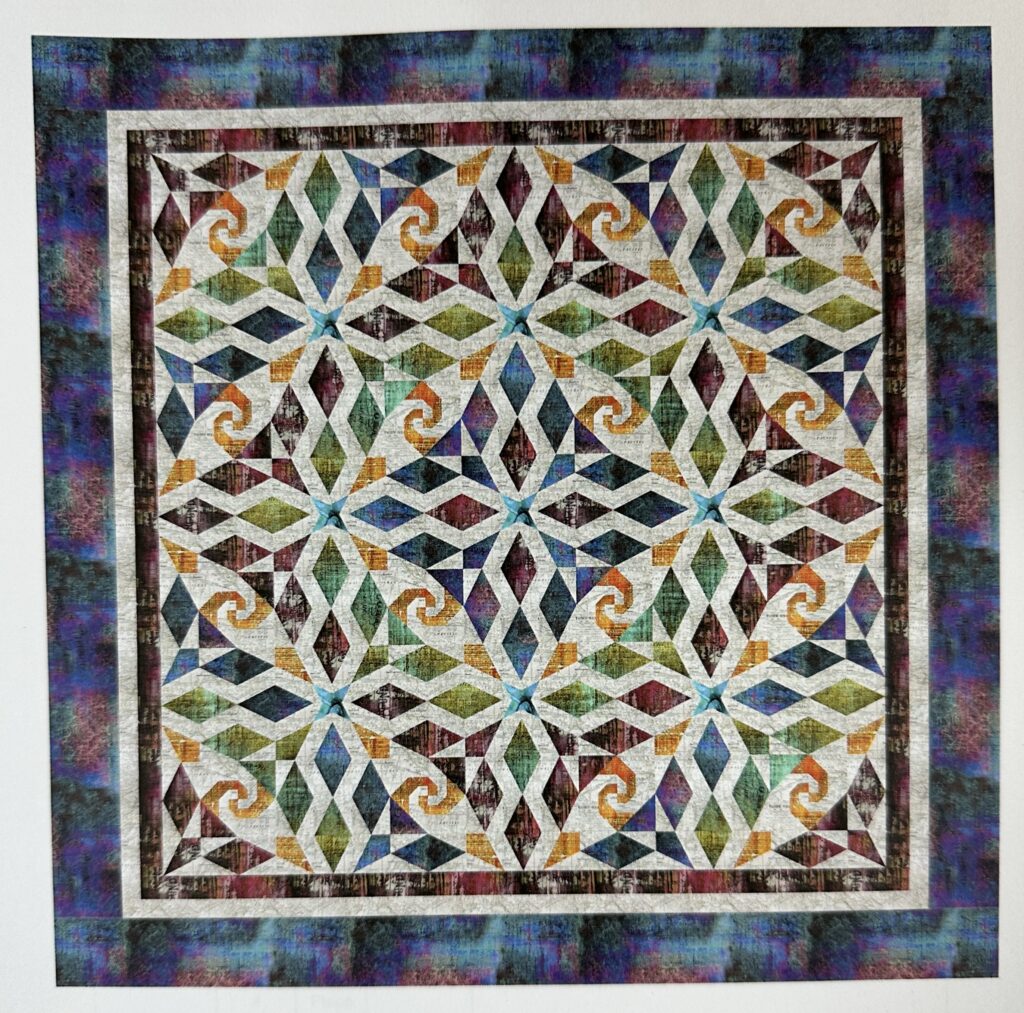
Crystallographic balance
This type of balance involves using shapes in a seemingly chaotic and random way similar to mosaics, however, an overall balance is maintained. Elements are placed in a visually equal way, distributed throughout the design. This storm at sea quilt kit has a mosaic-like balance. Oh man, I love the Tim Holtz fabrics, too.
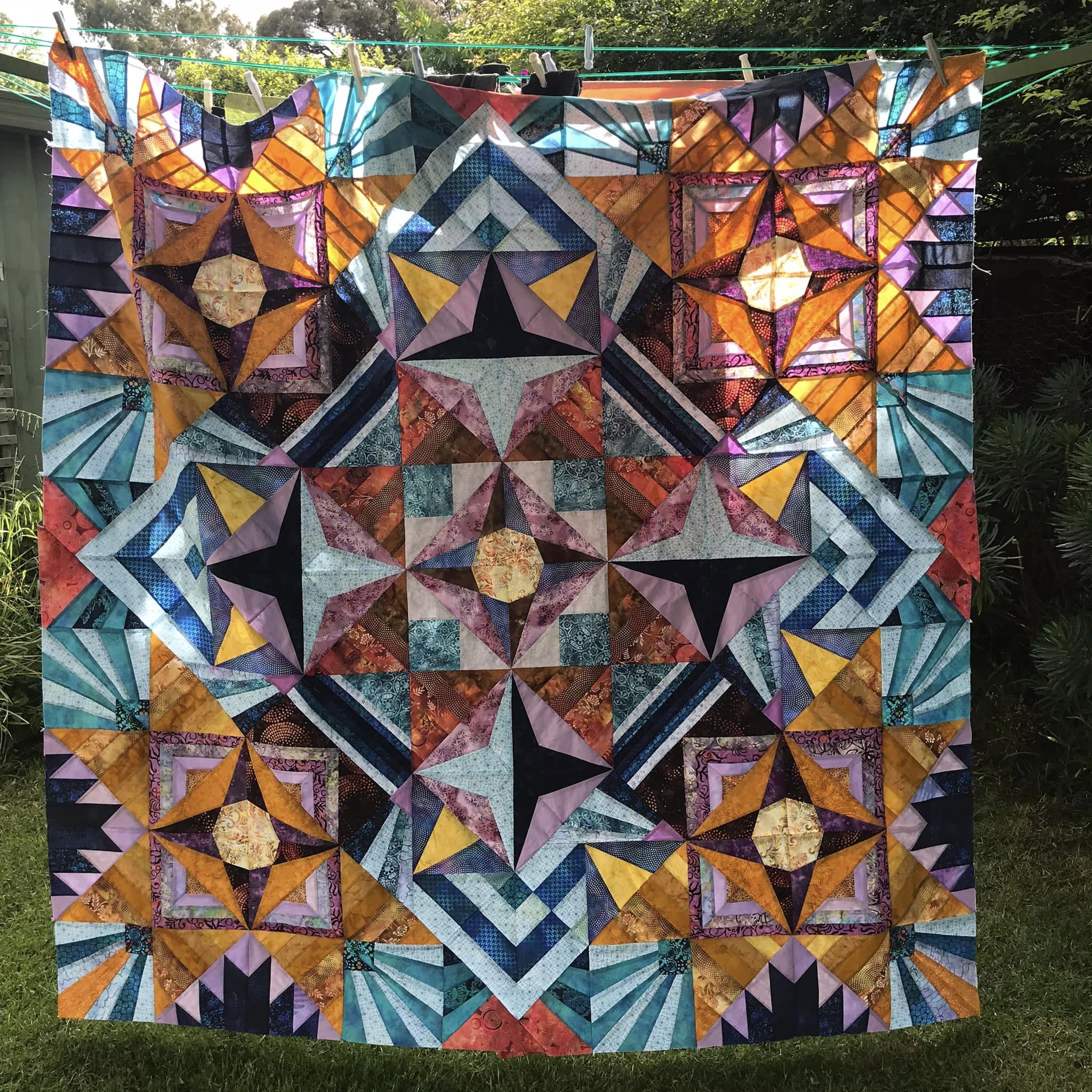
Here’s an example of a square wall hanging with a radial design. The focal point stands out against the lighter yellows and yellow-oranges.
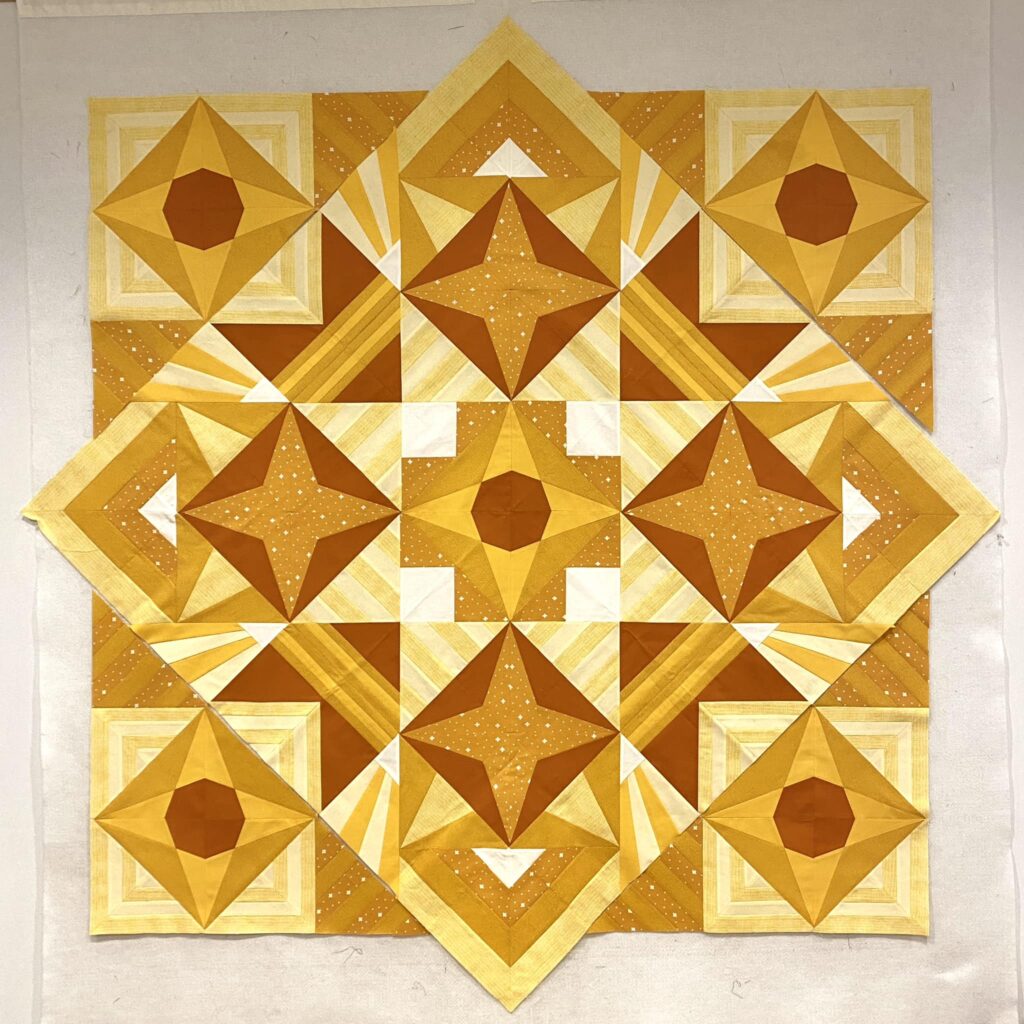

Whether you start with a pattern or design it yourself, placing the elements – shape, line, color – adds or takes away from it’s visual harmony. By backing up your choices the elements of design and key principles, you’ll create a radial design quilt you love.
The Basics of Radial Design with Symmetry
All of my block of the month quilt designs use radial symmetry as the primary way to build harmony. I use the elements and focal points to support my design intentions – go radial, go bold, go symmetrical! RAH.
- Shapes are repetitive pattern builders.
- Colors emphasize the shapes, movement and focal points.
- Focal points anchor the design.
- Repetition is the pattern and harmony maker.
Radial symmetry ideas keep me awake at night (who am I kidding – I daydream, too). I’m fascinated by the intersection of creativity, design skills and knowledge when I bring one to life. And sometimes, a little stressful, too. So many decisions.
Examples of Radial Balance in Quilts
Radial balance in quilts can be found in a variety of styles because of its so versatile.
Traditional and historical quilts
These quilts speak to the timeless appeal of this design technique. One example of this is the Mariner’s Compass Stars quilt block book by Carol Doak, which features radial designs that radiate outwards from a central point.
I’ve been inspired by her work, who has made star quilt blocks her mission. She uses foundation piecing, which I like to do with the freezer paper piecing method.
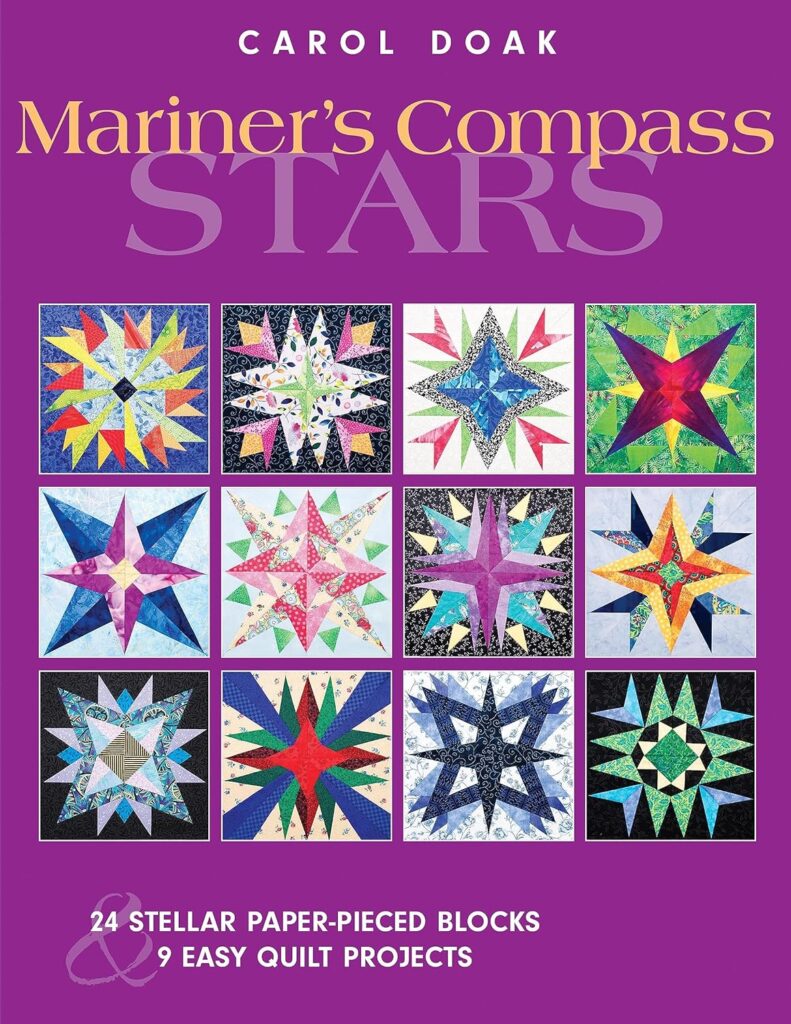
Outshine is my version of a Mariner’s Compass. Sample the free block pattern and tutorial to learn about symmetrical radial design and modern triangles.
Modern Radial Design Quilts
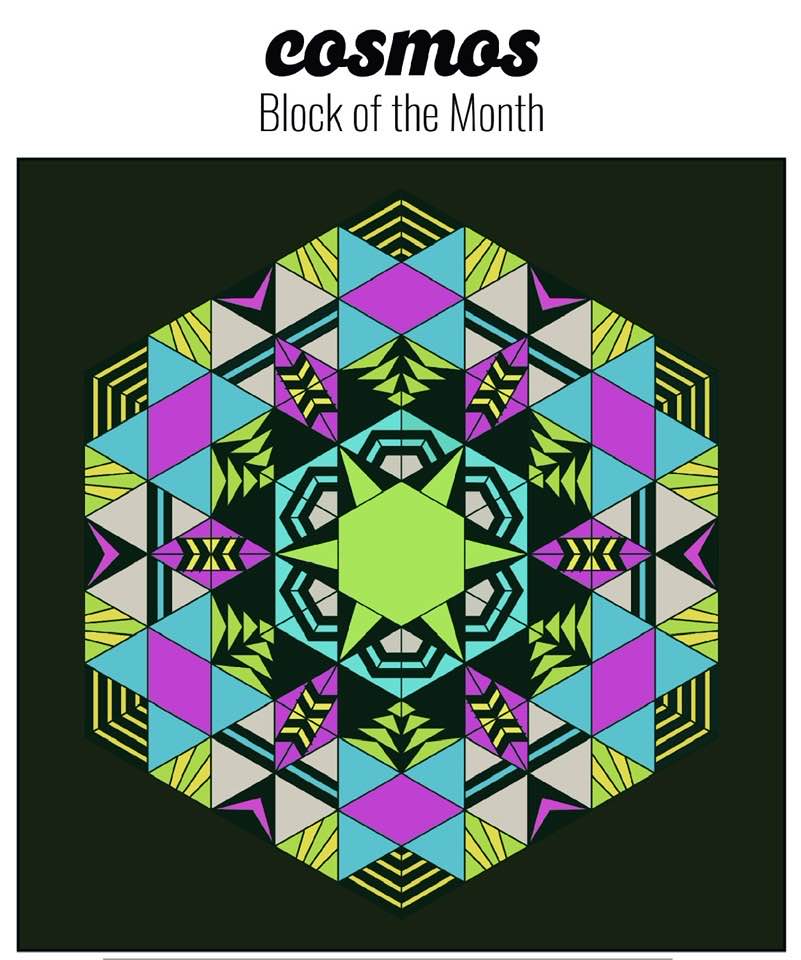
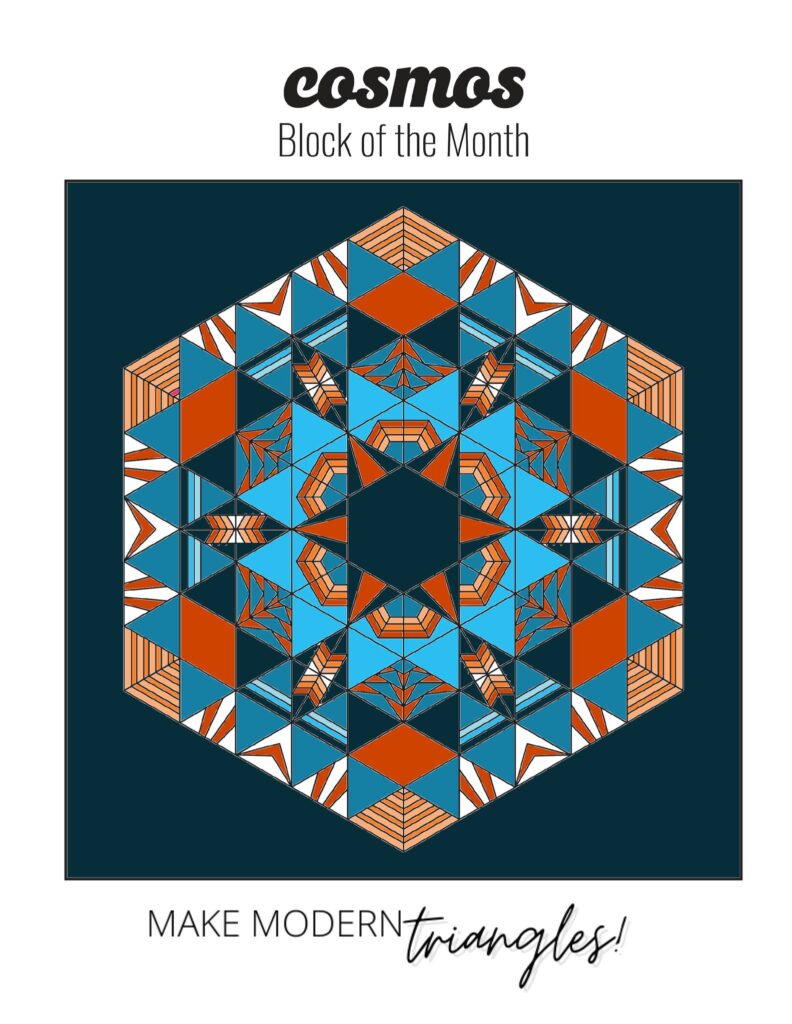
Cosmos BOM is a radial design using a hexagon. I used my modern triangles to make 12 rays in two colorways.
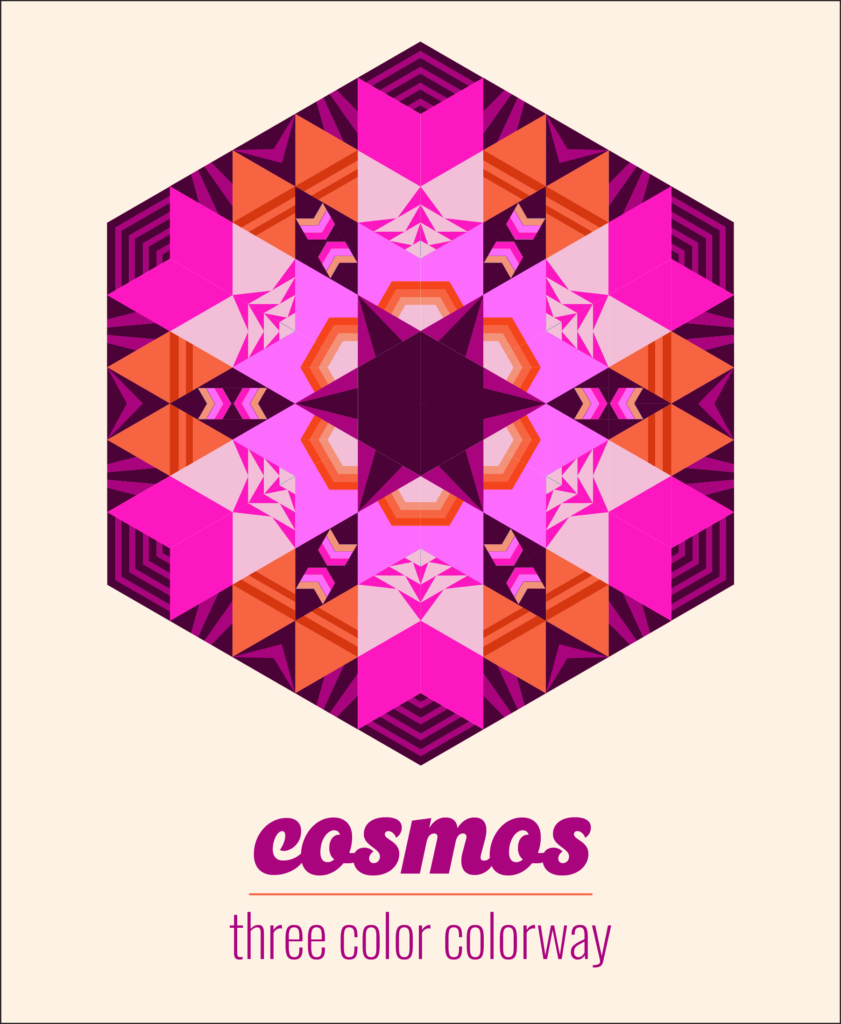
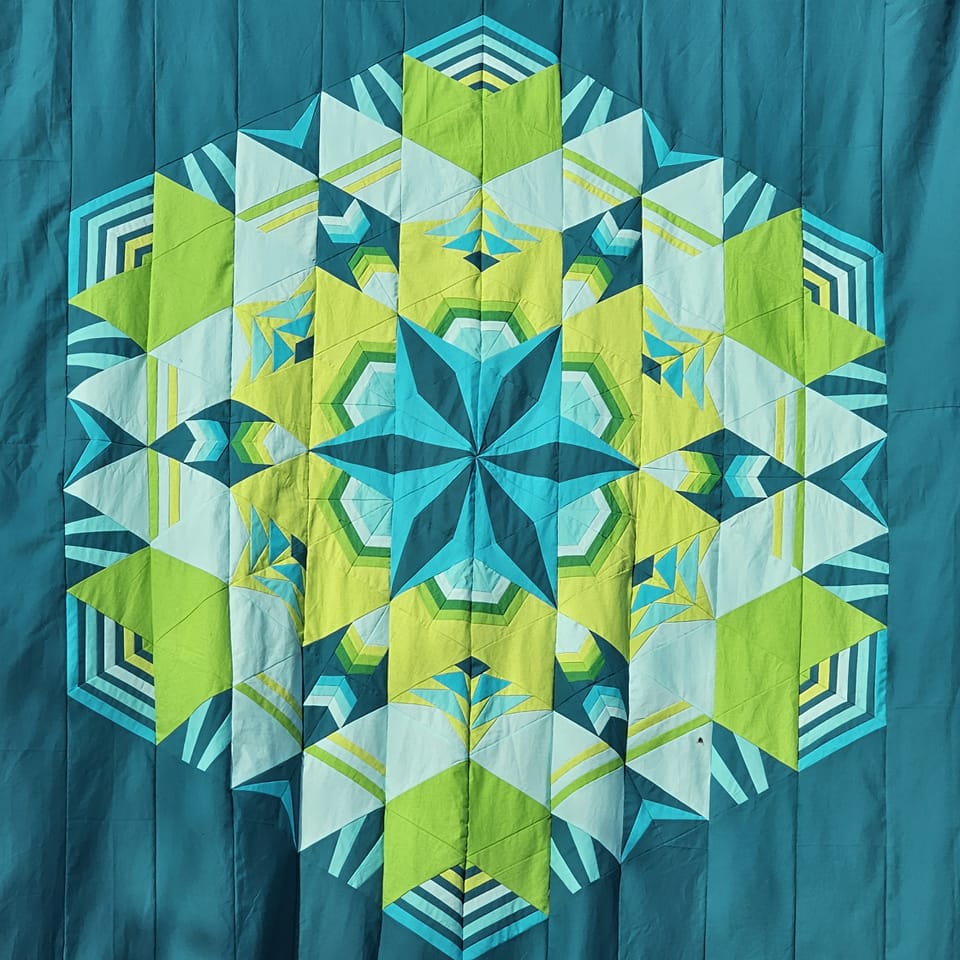
Modern quilts often incorporate radial balance with bold colors, clean lines and positive/negative space. Overall, they have a strong graphic design feel. They may include a spiral or concentric circles. Cosmos BOM quilt radiates around a star.
Rainbow Quilts + Radial Design
I’ll always love a rainbow quilt. The color palette matches a circular color wheel so they’re a perfect match for radial design quilts. Aurora BOM features four colorways in different rainbow versions.
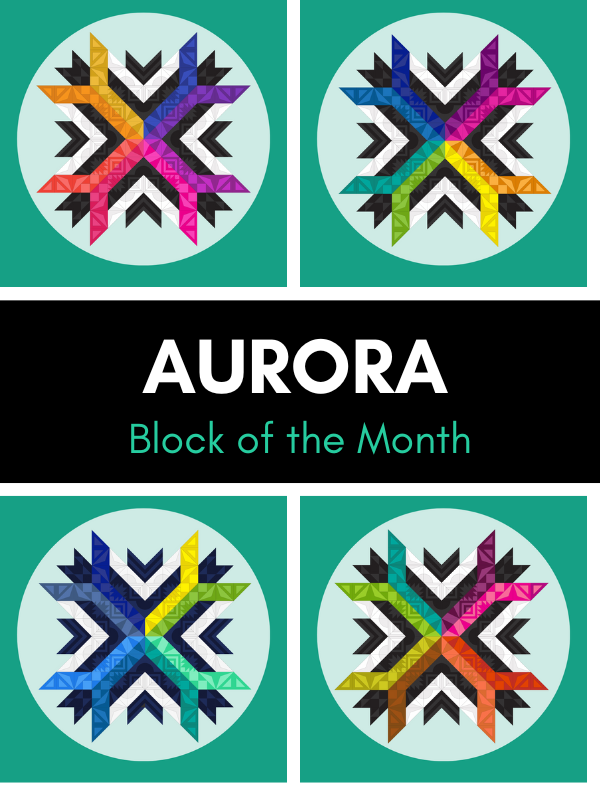
Whether you prefer a traditional, modern, or artistic approach, radial balance can add depth and visual interest to your quilts.
Why is radial symmetry exciting for quilters and designers?
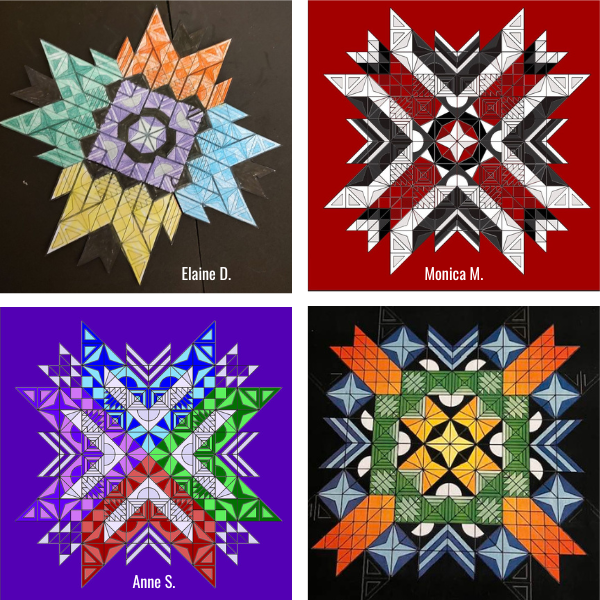
Aurora’s design offers exciting ways to add interest and visual complexity. My quilts often look way more complex than they really are. I like simple but it’s never boring. Look what four spokes and triangles can do!
4 Ways to Create Radial Symmetry in Quilts
There are four main ways to achieve radial symmetry in quilting:
- Shapes – Triangles are the repetitive pattern builders in my quilts. Multi-faceted, modern triangles are used individually or joined into larger blocks to make hexagons, squares, stars, rectangles or larger triangles. By arranging these shapes around a central focal point, you’ve creaed a sense of balance and harmony. All is well in the quilt-i-verse. By the way, triangles are pros at pointing in directions. Use them like crazy.
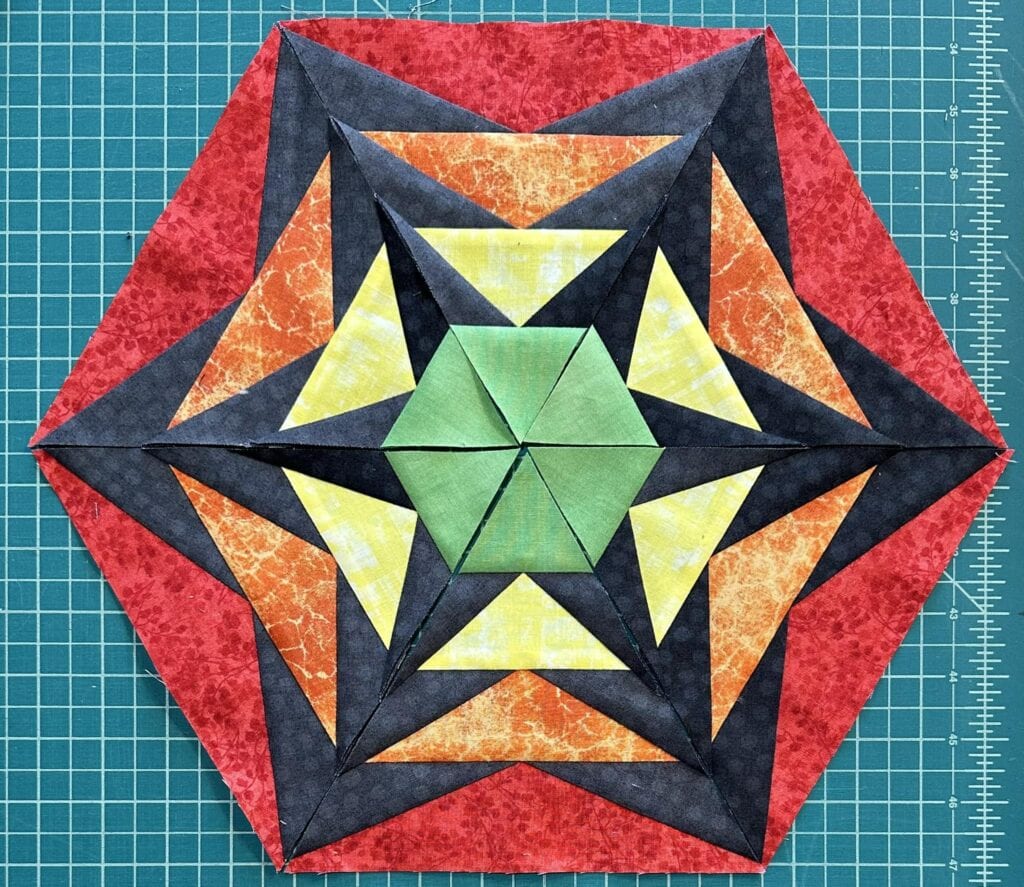
- Color – Bold colors are the main way that I create “rays” and focal points – I use various values of the same colors to create direction and movement. Playing with your colors and using different shades and hues also create balance and depth in quilt designs.
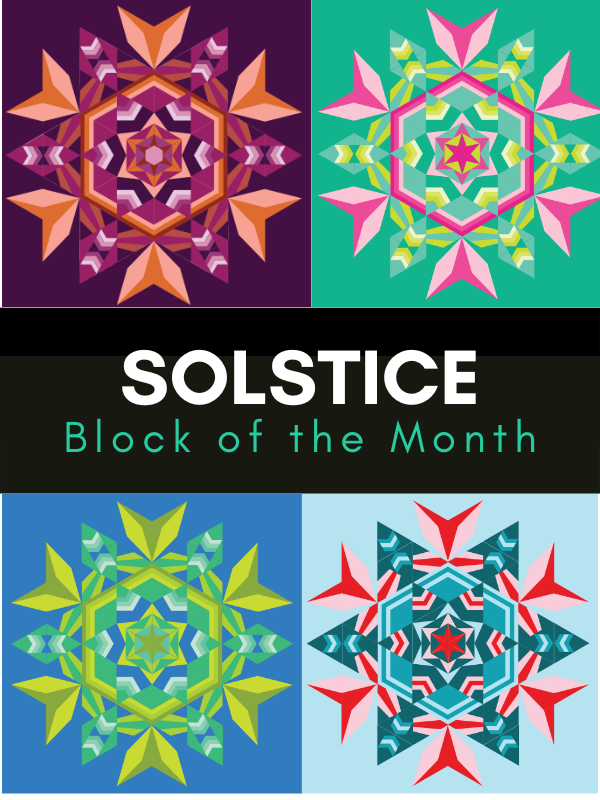
- Focal points – Primary and secondary focal points offer many ways to move the viewer’s eye around this type of design. In Sparkler BOM, I have one center focal point in hot pink and yellow (that you can’t miss) and two secondary sets on each axis in hot pink. The green stars in the four corners could also be secondary focal points.
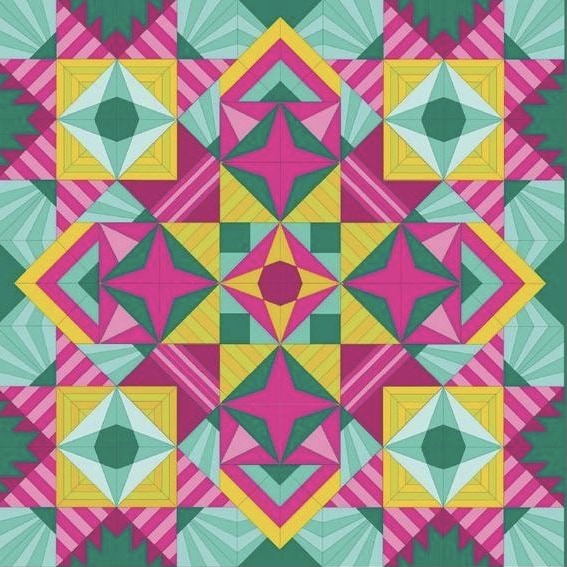
- Repetition – A strong modern triangle designs uses repetition throughout to create identical patterns. Random use of any of the elements dilutes harmony and throws the design off kilter.
Create stunning and visually balanced quilts by utilizing these techniques.
using shapes in a radial composition
Using a variety of radiating shapes makes a dynamic composition.
Start by choosing a shape for the focal point in the quilt. Use a star, circle or even a square. Below, notice the emphasis on squares that frame the center star in Sparkler BOM. They are arranged in sets of two and one in each corner around the focal point radiating outward in a symmetrical pattern. By maintaining equal spacing and proportions between the shapes, a sense of balance and harmony is achieved.
Experiment with different shapes and where they are placed. I like how different shapes and combinations make a quilt look more complex than it is. Take the time to play and plan to give design time to evolve.
Tips for creating a dynamic focal point
Designating a focal point is the most important part of creating a radiating design. This focal point serves as the anchor and first draws the viewer’s eye.
The focal point can be one shape like a star…
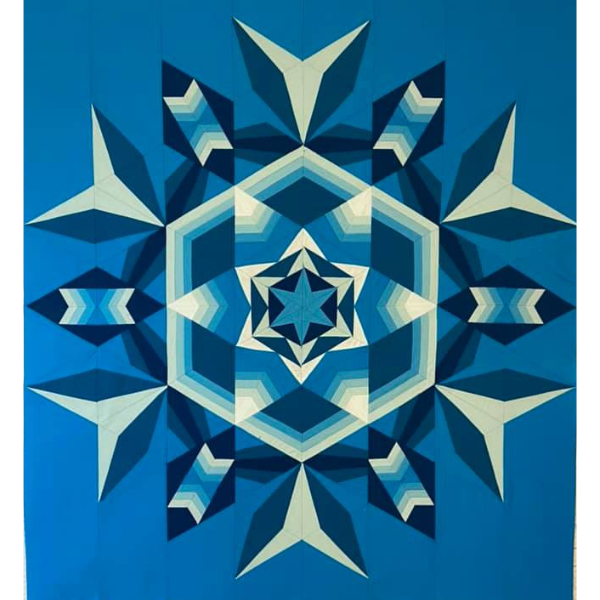
Or a combination of different shapes.
Below, Jane Munsell created a large center star with diamond rays and continued the pattern outward with more yellow triangle rays.
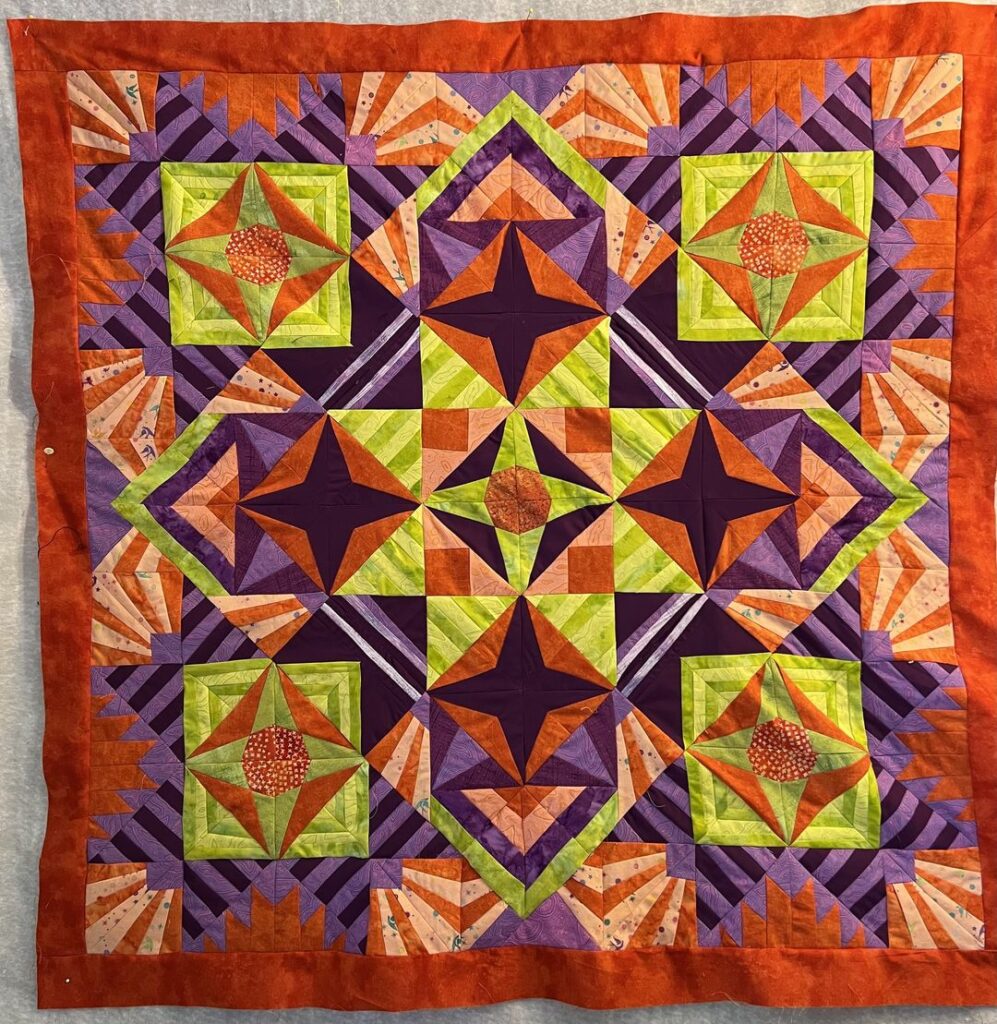
Consider using different techniques, such as appliqué or embroidery, to add texture and details to the central point.
Tips for using color
Color plays an essential role in creating symmetrical patterns in quilts. By playing with different shades, hues, and tones, quilters can create interesting designs.
Selecting a color palette
Get started by selecting a color palette that complements the design and theme of your quilt. Consider using contrasting colors and color harmonies to create a vibrant palette. Some examples are pairing warm and cool colors together or using a split complementary color scheme.
Play with Coloring Pages
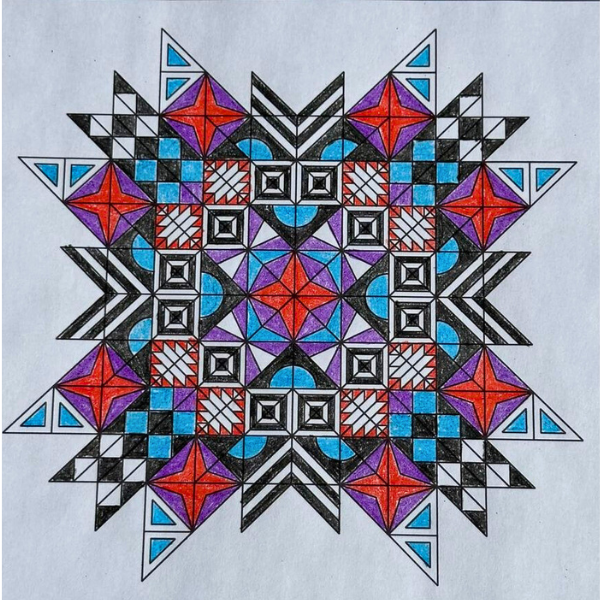
I like to use a coloring page – paper or digital – to experiment with a palette. Procreate is my fave digital app (available only for iOS products). Colored pencils are quick and easy tools to map out colors. And you don’t have to color the whole page: color in one quarter of the page and make three copies. Cut them out and tape together to see the whole design.
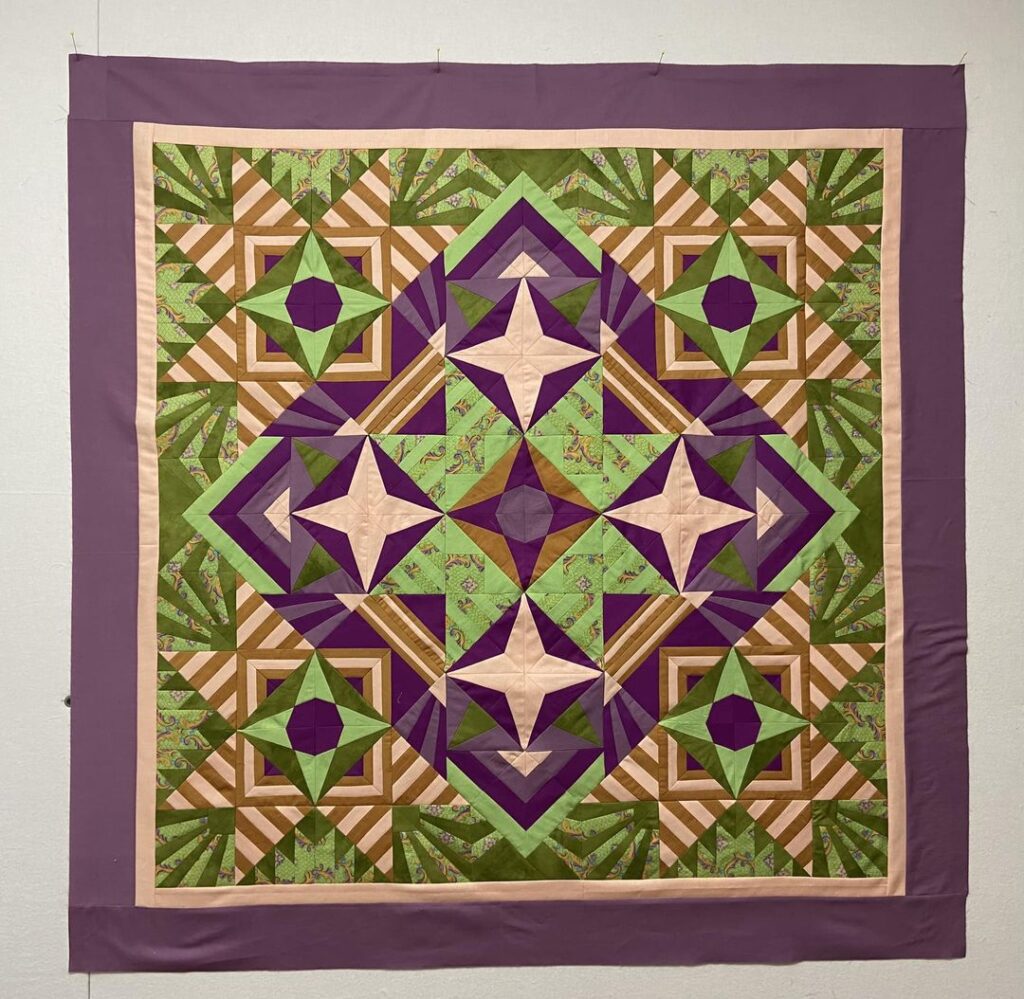
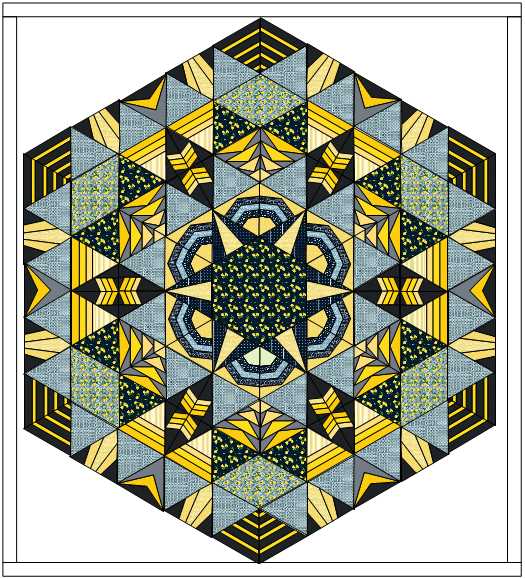
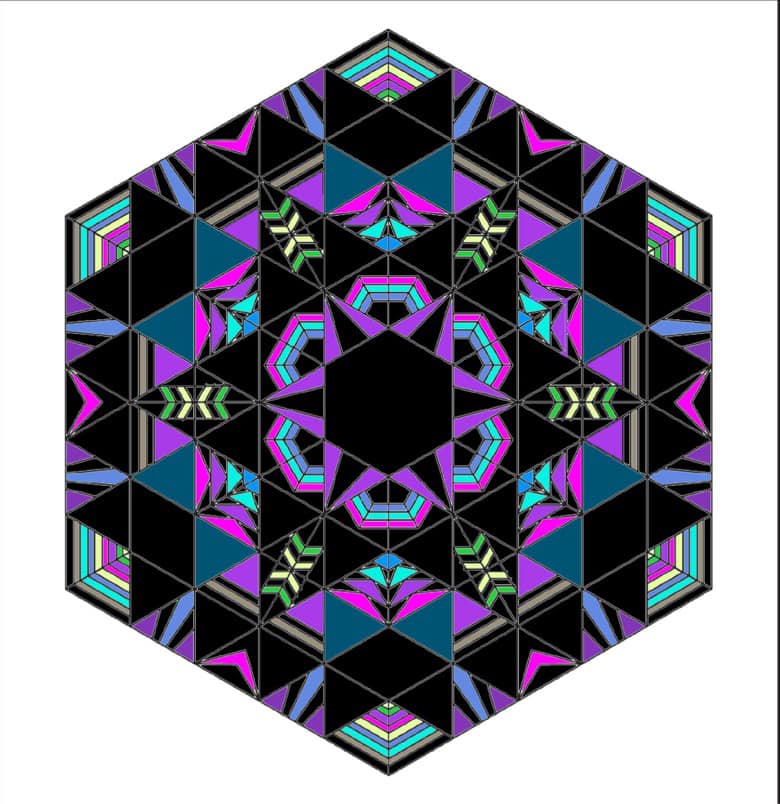
It’s amazing to see how Make Modern Triangles members use color on the same BOM quilt. Terri Williams emphasized the focal point with bright yellow, then scattered it throughout the design, balancing out the big dose in the center.

Christin Grothaus placed white around the darkest colors, popping the center star out.
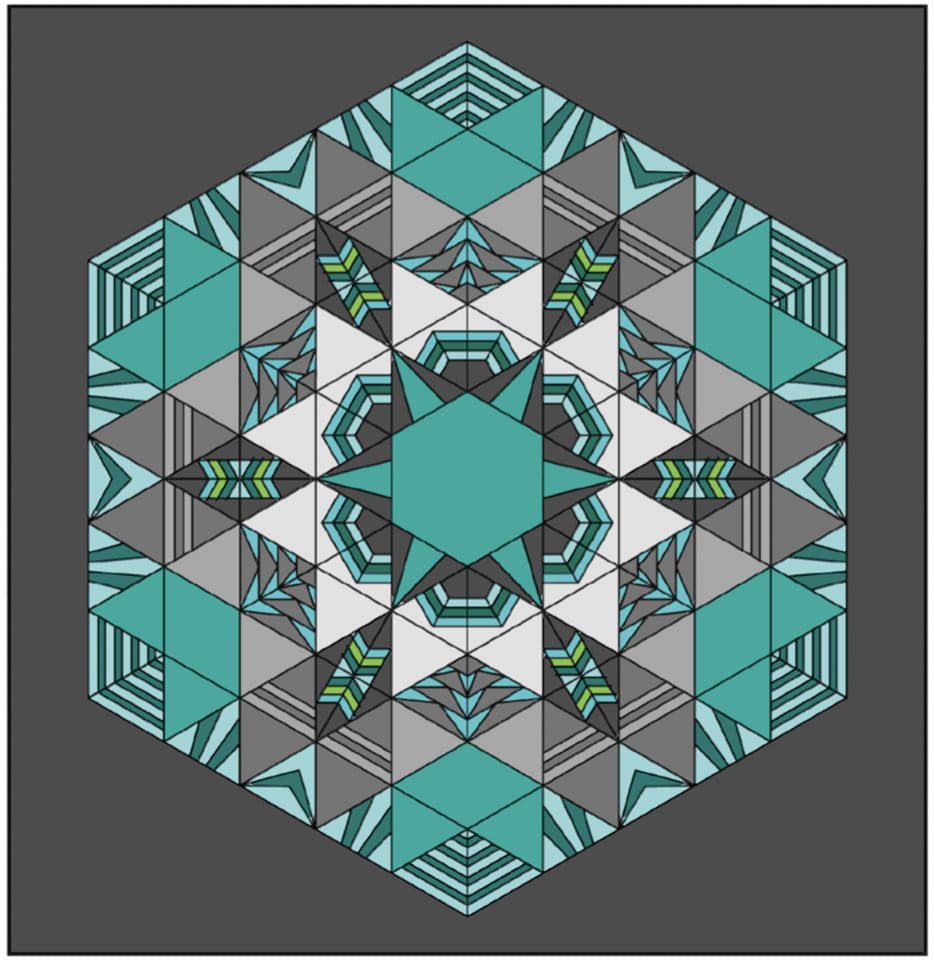
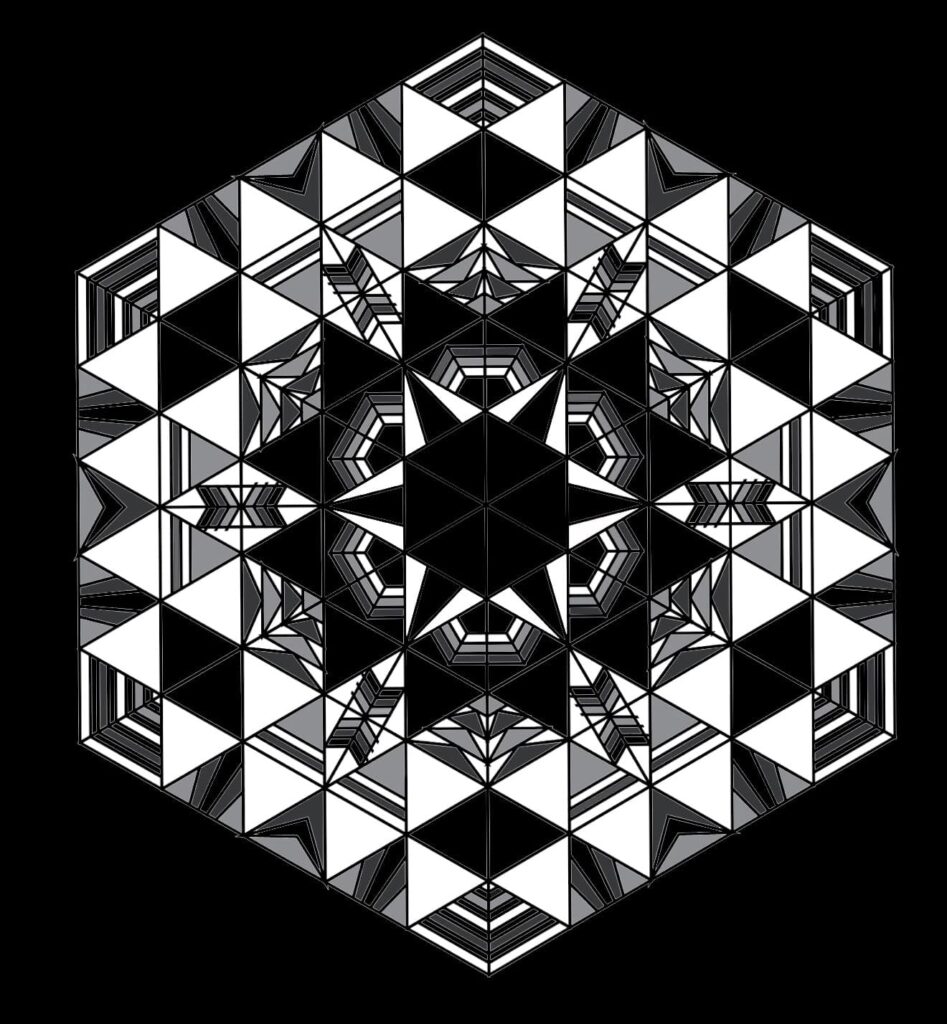
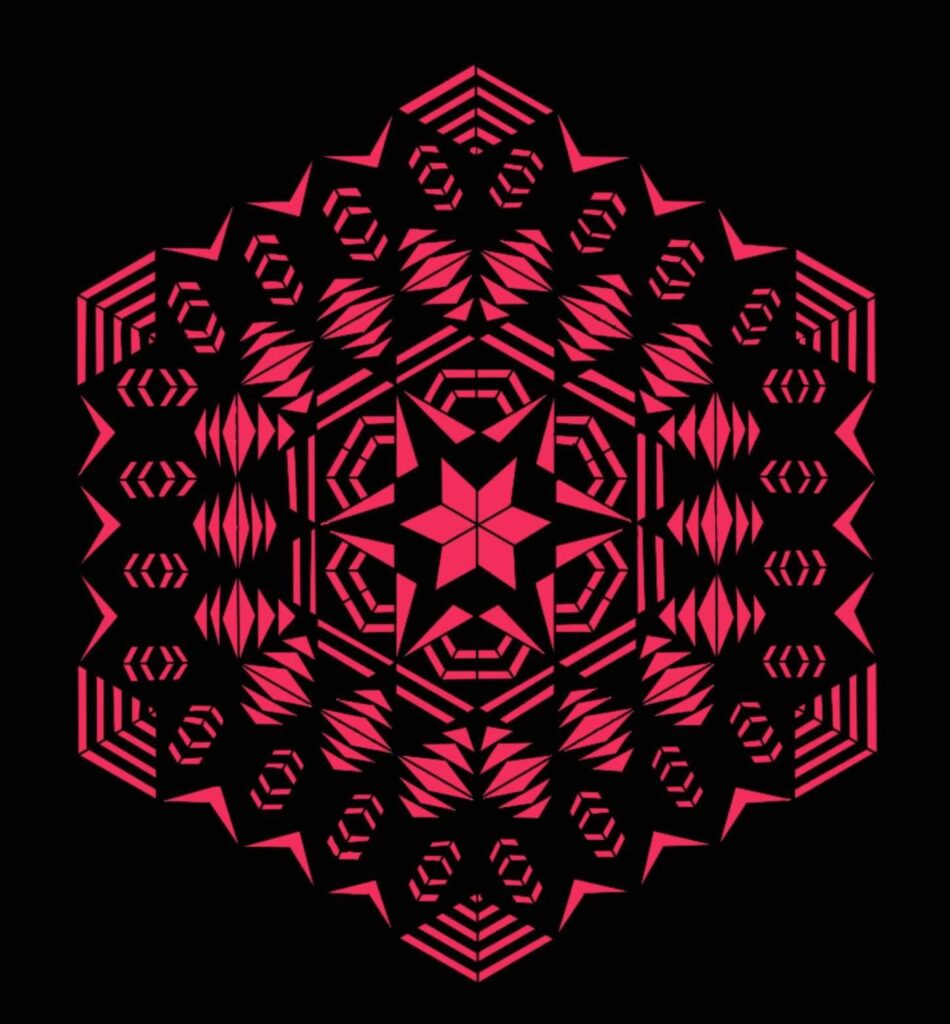
I’m all RAH-RAH for color but this black and white version shows wonderful balance throughout the quilt. The focal point doesn’t overpower the rest of the design. So nice.
Types of Fabrics
Color creates depth and dimension in a quilt, especially with gradations. Gradations are definitely my thing.
A color wheel is extra helpful for finding tints, tones and shades for gradations. Solid fabrics are my go-to Experiment with shading and blending techniques, like gradations in values of your main colors using solid fabrics. EXAMPLE HERE. IMAGE. Dyed fabrics add subtle changes in color that work well in these designs.
Quilters often struggle with color – I hear this often from Make Modern Triangles members. Many of us (including me) weren’t formally trained as artists or have created artwork. I wanted to do more with color so I immersed myself in color theory and practiced by playing with color and fabric. In the next section, I’m sharing tips for balancing colors with value, temperature, placement and color harmonies. For a deeper dive on these topics, learn more about color schemes and color wheel basics first.
Tips for Balancing Colors
Training our color eye and using color tools are two ways to balance colors in quilts. These are valuable skills for every quilter. Learning to use value, temperature, placement and color schemes will make every quilt better.
Balancing Color with Value
Balancing color with value is an important aspect of achieving radial balance in quilting. Value refers to the lightness or darkness of a color. Balancing value can help create depth and dimension in your quilt.
Different values create contrast from a little – baby pink and white – to a lot – baby blue and navy. Select colors for your quilt that vary between light and dark values in colors.
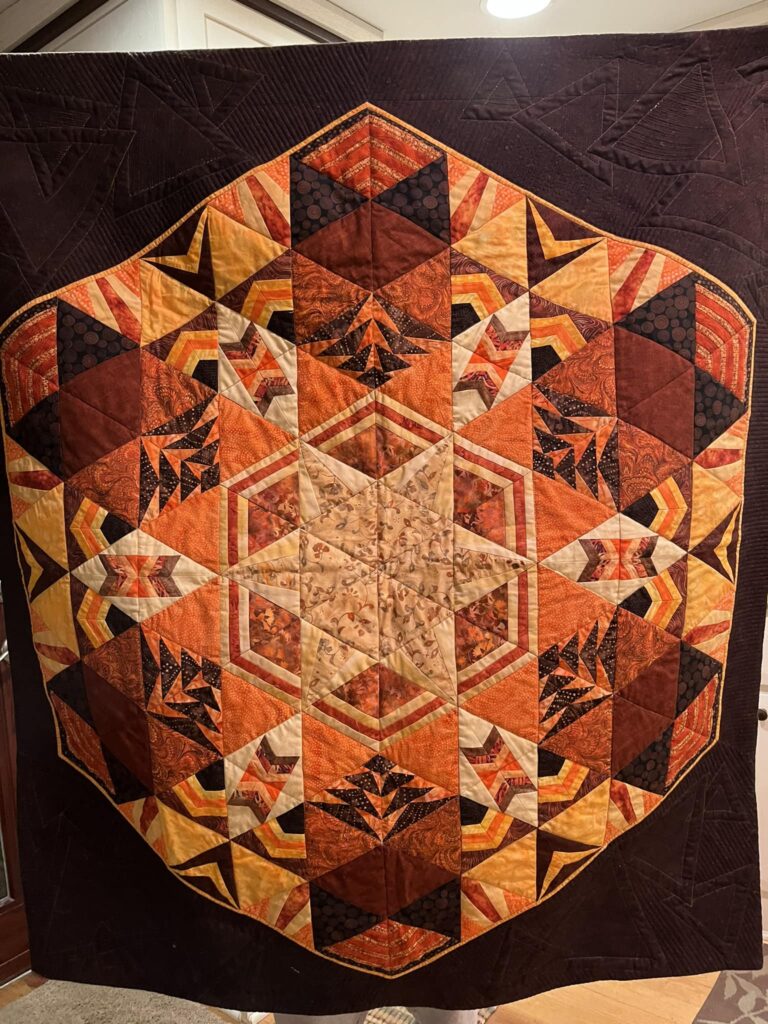
Include strong value changes to elements and focal points to pop them out. Linda Puhle used values with amazing effects in her monochromatic color palette. The colors are all warm but she pulls it off with value.
By following these tips, you can create stunning quilts that showcase the beauty of radial balance.
Balancing Color with Temperature and Placement
Balance colors with temperature which refers to the warmth or coolness of a color. Most quilters ike many colors but skew to either cool or warm ones. Which do you prefer?
Brian used more cool blue that red to achieve balance. The cool and warm colors are spaced evenly around the center.
Warm and cool colors are fantastic contrast makers when placed together so choose what feels right to you. Know that you can warm up or cool down a color with tints, tones and shades – that’s when a color wheel is handy.
Warm colors like saturated red, yellow and orange can overpower cooler colors, creating too much contrast or just too much red! The amount of warm and cool colors matter.
Consider using warm colors as focal points or accents, and cool colors as background or supporting elements. Or vice versa! Here’s is an example of balancing colors with temperature. Liz’s chose a blue background balanced out the pink/red blocks. It takes more cool blocks to balance out the warmer ones.
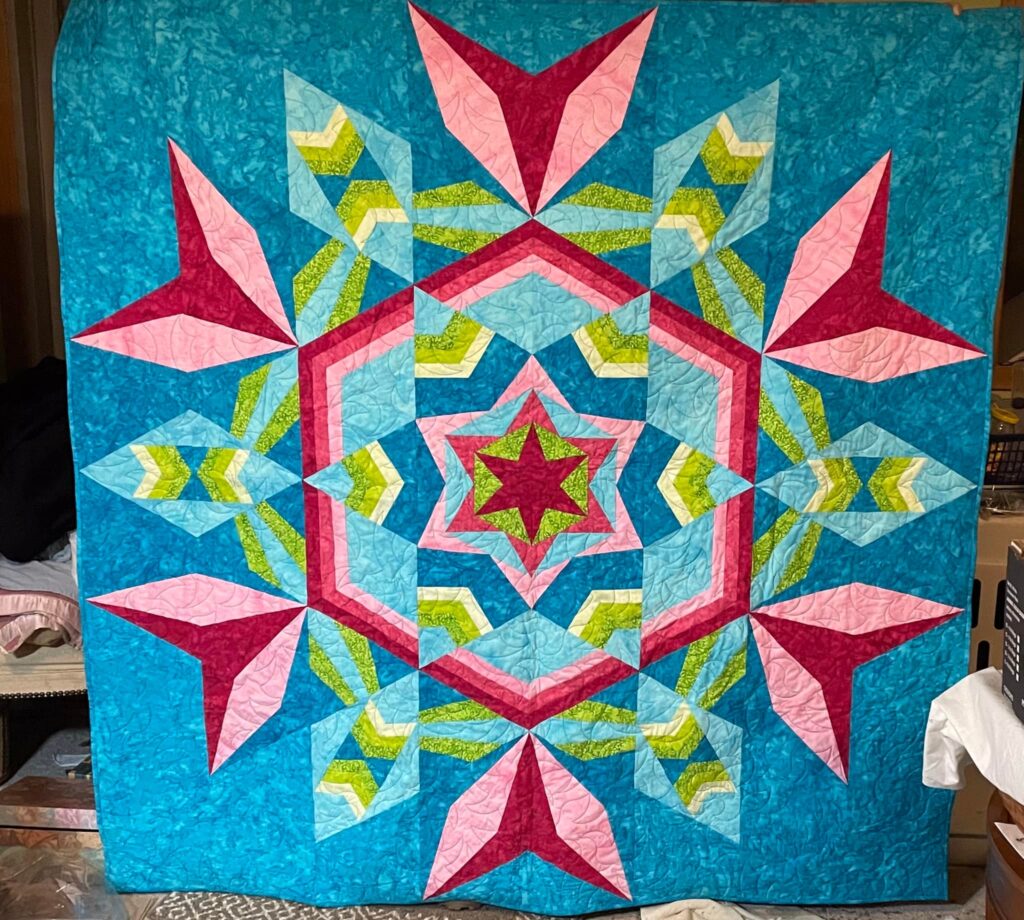
When arranging colors, decide which parts you want to emphasize. Will you do that with value or temperature? Or use one color in tints, tones and shades, relying on placement?
Last, treat the focal point(s) like VIPs!
Pinterest Loves Radiality
Oh my gosh, so many pins devoted to balancing out a radius! Here are some fun ones:
- Award-winning quilter Audrey Esary’s Radial Quilt Series
- Jennifer Candon – improvisational radial design – Preconceived
Conclusion
In the world of quilting, radial design brings a mesmerizing symmetry to many quilt designs. Visual balance supports a radial design with colors, values, temperature and focal points.
BY THE WAY, YOU CAN JOIN OUR BOM PROGRAMS ANYTIME!
Join our Block of the Month programs any time, start any time, make any project, finish any time, work at your pace and repeat! Click here to learn about all of the goodies in the Club!

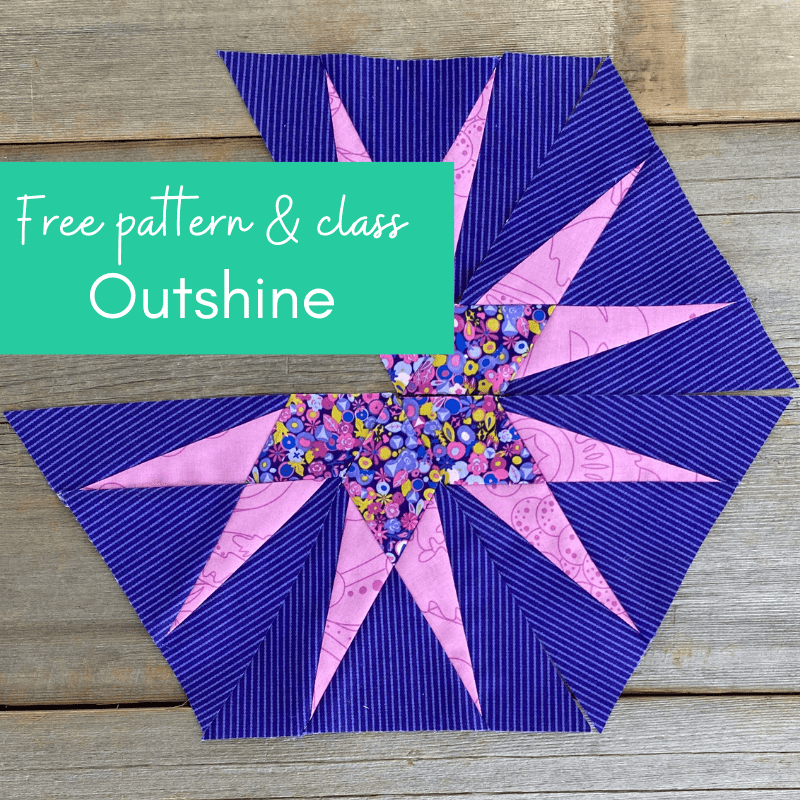
Modern triangles are so versatile (and fun!) when it comes to radial designs. Learn how to make Outshine with a free block pattern and tutorial. Choose your fabrics and make a beautiful block or a whole quilt.

- Master Freezer Paper Piecing – 12 Easy Tips
- Choose Easy Analogous Combinations for Quilts
- Beginners Guide: Using a Walking Foot
- Modern Quilt Colors: Mixing Brights Right Tutorial
- Celebrating Quilty Progress
- Rainbow Quilt Designs: 9 Ways to Make Inspired Rainbow Quilts
- Hexagon Quilts Roundup
- Aurora Block of the Month
- Quilt Coloring Pages: 4 Methods for Successful Color
Frequently Asked Questions
How do you choose the right fabrics for a radial quilt?
Choose the right fabrics for a radial quilt by choosing your colors first. Use a color wheel to find color schemes and see your all of the choices. Consider the colors and patterns that complement your design and theme.
Can beginners attempt radial design quilts?
Absolutely! Choose from simple to complex quilt patterns with radial designs. Check the quilt patterns for the required skill level. It’s a great way for beginners to learn new techniques and play with color.