• About
    • Privacy Policy
  • Teaching
    • Member/Student Login
    • Online Programs
  • Shop
  • Member/Student Login
  • Blog
    • Free Quilt Patterns – Scrappy Whirligig Quilt

Bryan House Quilts

Reduce Bulky Seams by Grading Seam Allowances

Uncategorized

21 Feb

Reduce bulky seams by grading seam allowances

Where intersecting seams meet in a quilt top, fabric layers often make bulky, lumpy bumps! And they are not easy to sew through, and sometimes, impossible to sew through! Learn simple techniques to reduce bulky seams and lumpy bumps by grading seam allowances. Read on or watch the video tutorial here.

Key Highlights

  • Grading seam allowances is a must for flatter, smoother quilt tops.
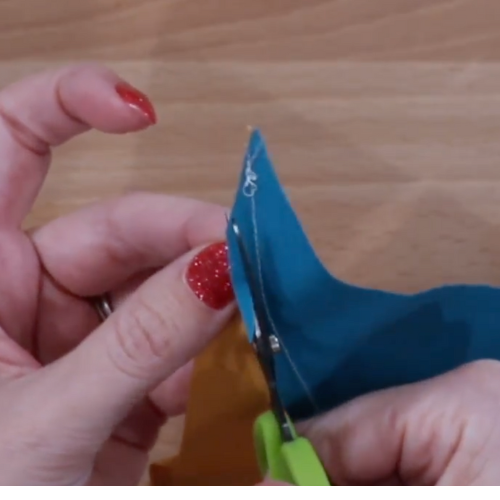
  • It involves trimming a portion of a seam of one or more layers.
  • Each seam is trimmed to a different width, slightly smaller than the other.
  • Reducing bulk is especially important for star blocks where many blocks join in the center.
  • Don’t be afraid to grade! The minimal reduction in seam strength is worth the improved appearance and ease of pressing.

Why should you grade seam allowances?

Ever wondered why seam grading is such a big deal for quilting? Let’s break it down.

The main reason is simple: it eliminates bulky seam allowances. When multiple layers of fabric are sewn together, the seam allowance can become thick and difficult to press flat. This is especially noticeable with heavier fabrics or where seams intersect. These lumps and bumps are difficult to press flat and sew through, no matter how large your needle or how strong your sewing machine motor!

By trimming each layer of the seam allowance to a slightly different width, you’re essentially stairstepping the bulk into tiny increments. This creates a smoother, more professional finish on the right side of your quilt, and a much easier time when it comes to pressing those seams open or to the side. Trust me, your finished project will thank you!.

Why is grading seam allowances important in QUILTING?

Grading seam allowances is crucial in sewing to reduce bulkiness, create smoother seams, and stitches over the quilt top more easily. By grading seam allowances, lumpy bumps are less visible and the quilt top is smoother. Stitching is more consistent and this makes a tremendous difference.

Step-by-Step Guide to Grading Seams

Grading is a simple technique where you trim each layer of the seam allowance to a slightly different width, like stair steps. Now let’s gather our tools for the job.

Sewing Tools Needed for Effective Seam Grading

Before you start grading, you’ll need a few essential tools:

  1. Sharp Fabric Scissors: A good pair of fabric scissors is a must-have for any sewing project. I use Karen Kay Buckley Perfect Scissors 4-inch size – and worth every penny. Make sure to use scissors with sharp, pointed blades that can cleanly cut through multiple layers of fabric.
  2. Duckbill Scissors (applique): These scissors have one blade shaped like a duckbill, which helps to lift the top layer of fabric away from the seam allowance you’re trimming. They’re particularly helpful with delicate fabrics or curves.
  3. Seam Ripper: Use a seam ripper to pick out stitches at the ends of the seam lines where they overlap.

Techniques for Grading Different Types of Seams

Grading techniques vary depending on the type of seam you’re working with. Here’s a quick rundown:

  1. Press the seams to one side.
  2. For straight seams – pressed to one side: On the wrong side, trim the first layer facing closest to you by ⅛-inch while the innermost layer stays ¼ -inch wide. Notice how the gold fabric layers of the seam are narrower in the photo below.
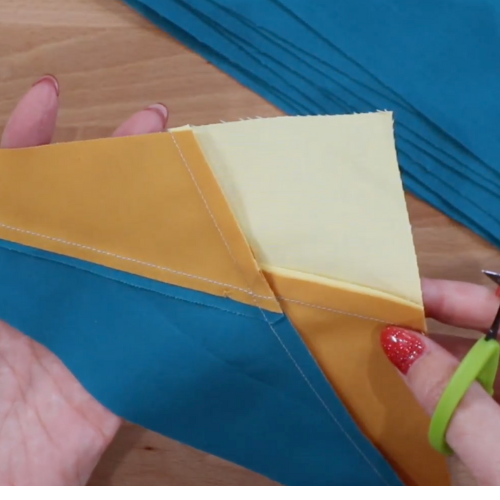
Straight seams pressed to one side are the first step in grading seam allowances.
Cutting off 1/8 inch toward the intersection of seams

3. Convex Curves: These curves need a little extra room to lay flat. After grading, make small “V” clips or notch into the seam allowance to allow for easing. The notch helps the spread the fabric open so it lays flat. Notch seam allowances when both are pressed to the side of the seam outside of the curve.
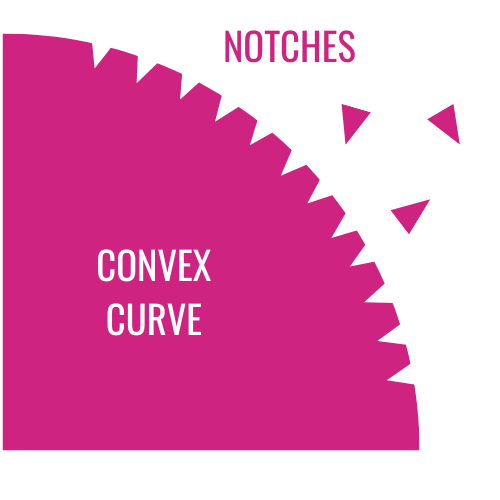
Convex curve uses notches for grading seam allowances.
  • Concave Curves: Clip into the seam allowance every ½” or so to allow the tiny fabric sections to slightly overlap each other. Concave curve allowances are pressed away from the curve, not into it.
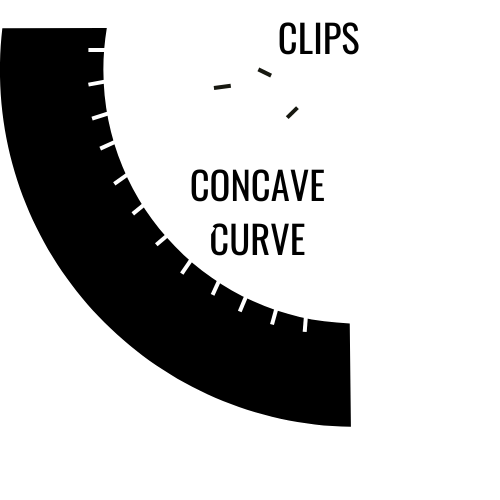
Concave curves use clips to flatten seams

Always refer to your pattern instructions for specific grading recommendations for your project.

Quick Tips Make the Grade

  • When seams overlap, pick out a few stitches at the ends to open up the seams which helps make a clean cut.
  • You might have smaller than ⅛-inch allowances where many points meet and that’s okay.
  • Open seams need grading sometimes, depending on the block type.

Conclusion

Grading seam allowances enhances the overall look and feel of your quilts by reducing bulk and ensuring smooth edges and curves. Understanding the importance of seam grading and using the right tools and techniques can take your sewing skills to the next level. Remember, personal preference is key for precision, and practice makes better to sew professional-looking seams. By following these steps and tips, you’ll be on your way to creating beautifully finished quilts. Happy sewing!

Frequently Asked Questions

What is the difference between grading and trimming seam allowances?

Trimming means simply cutting off excess fabric from the seam allowance. Grading involves trimming each layer of the seam allowance to a different width, creating a stepped effect that reduces bulk.

How can I prevent bulky seams in quilt tops?

Press your seam allowances open when possible. At seam intersections, trim the excess fabric from each seam allowance close to the joining point if turning both to one side.

  • Use sharp scissors and trim small amounts
  • Don’t backstitch at the beginning and end of each seam, which adds extra thread.

MORE RESOURCES

  • How to sew a scant quarter inch seam allowance
  • Beginners Guide: Use a walking foot for quilting
  • Rainbow Quilt Designs: 9 Ways to Make Inspired Rainbow Quilts
Previous Post: « First Month, First Block, First TA DA!
Next Post: How to Press Flat Quilt Seams Like a Pro »

Primary Sidebar

New 2026 Block of the Month!

Graphic of Alchemy Quilt

Join the 2026 Block of the Month Program

Get my Modern Triangles Quilt Book

Get my Modern Rainbow Quilts Book

Image shows cover of the book "Modern Rainbow Quilts"

Make the Solstice Quilt!

Solstice Block of the Month by Bryan House Quilts

Get Your Invite!

Make Modern Triangles Logo

Make the Sparkler Quilt!

Image Shows Sparkler Quilt Top by Rebecca Bryan

Make the Echo (Echo!) Quilt

Echo BOM now open to join

Make the Wildflower Quilt!

Wildflower Block of the Month by Bryan House Quilts

Make the Stargazer Quilt!

Anne's Stargazer BOM

Make the Rainbow Triangles Quilt!

Rainbow Triangle BOM, modern triangle quilt, Rebecca Bryan

About

Hey there! I’m Rebecca, an author and teacher and freezer paper piecing evangelist. I’m also the founder of the Make Modern Triangles Quilt Club.

Disclosure

Just so you know, my site includes affiliate links from which I (it’s me! Rebecca!) receive payment or compensation. Something to consider as you peruse my website. Thanks!

Latest on Instagram

Comment ‘FREE’ to take my free class where I teach Comment ‘FREE’ to take my free class where I teach quilters the freezer paper piecing technique that changed my life! ✨

My tip for you this week is to set your seams by pressing after you remove the freezer paper!

Set your seams by pressing on the right side first, then flip and press in the direction your pattern suggests. Pressing is just as important as the piecing itself! 

Remember: press in one spot for about 5 seconds... no sliding! This keeps your fabric happy and prevents stretching.

Taking the time to press as you go will make a huge difference in how crisp and polished your finished blocks look.

Trust me, it’s the secret ingredient to freezer paper piecing perfection! 🔥

Comment “FREEZER” if you’re curious about learning this technique! 💕

#modernquilting #paperpiecing #foundationpaperpiecing #quiltingtechnique #quiltteacher
Experienced quilters, share what I missed in the c Experienced quilters, share what I missed in the comments! 👇

Comment ‘FREE’ if you’re a beginner quilter and want to take my free class, give quilting a try, learn a new technique, or simply improve your skills! 

#modernquilting #paperpiecing #foundationpaperpiecing #quiltingtechnique #quiltteacher
I don’t know about you, but for me, quilting has n I don’t know about you, but for me, quilting has never been about just making quilts.

It’s about slow mornings, quiet time to myself, creating something with my hands, spending time doing something textile, not scrolling on the internet, spending more time creating and less time consuming...

And I think that’s exactly why so many people are being drawn to quilting today.

You want to get offline, learn something new, and have more quiet time that is just for you and your imagination. ✨

I think we could ALL use more of that in our lives, and if you want to give it a try, I’ve got a free class you can sign up for by commenting ‘FREE’ below. 💕

#modernquilting #paperpiecing #foundationpaperpiecing #quiltingtechnique #quiltteacher
I’ve taught thousands of quilters over the last de I’ve taught thousands of quilters over the last decade, and I’ve been quilting myself for over 15 years, and this is what I’ve learned. ⬇️

What’s stopping you from quilting isn’t that you don’t want to do it. It’s because you have already convinced yourself of something before even giving it a fair shot. 

You’re probably thinking something like...

👉 “I don’t think I’m creative enough.”
👉 “It looks too complicated.”
👉 “I wouldn’t know where to start.”
👉 “I don’t have enough time.”
👉 “What if I spend all that money and I’m terrible at it?”
👉 “I’ve never been good at sewing.”

If any of those thoughts have crossed your mind, can I let you in on a little secret?

Almost every quilter I know started with one of those ideas in their head, including me. 🤫

The beautiful quilts you see today didn’t begin as beautiful quilts, they began as just an idea and a willingness to try.

Nobody sits down at a sewing machine and automatically knows how to quilt.

You learn by just doing it, sewing stitch by stitch, and every time you enter your sewing room, it gets a little bit easier, and you start to enjoy it more and more. 

If something has been holding you back from quilting, I invite you to take my free class where you have nothing to lose and so much to gain. 

Comment ‘FREE’ to sign up. 💕

#modernquilting #quiltingtechnique #quiltpattern #quiltdesign #quiltersofig
Comment ‘FREEZER’ if you want to take my free clas Comment ‘FREEZER’ if you want to take my free class and learn this amazing technique! 👇

Freezer paper piecing tip number eight is to press every seam right after sewing it. 
 
Don’t wait until later or until all of your blocks are done. Press those seams right away!

It might feel like it slows you down in the moment, but it actually saves you time (and frustration) later.

When you press as you go, your seams stay crisp, and your pieces lay flat, which makes lining everything up so much easier. You’re not fighting bulky seams or trying to “fix” things at the end. 🙌

Plus, pressing helps set the stitches and keeps your fabric from shifting as you build your block.

Think of it as part of the sewing process, not an extra step.

Your blocks will be flatter, sharper, and way more accurate… and your future self will thank you!

Comment ‘FREEZER’ for my free class! 💕

#modernquilting #paperpiecing #foundationpaperpiecing #quiltingtechnique #quiltteacher
MAKE A TEST BLOCK!!! Please, I am begging you. 😅 MAKE A TEST BLOCK!!! Please, I am begging you. 😅

You’d think after 15 years of quilting I’d be able to skip it...

And every once in a while I convince myself that I don’t need a test block because I’ve made this block hundreds of times or my freezer paper piecing skills are good enough to skip it... 

And do you know what happens every time I convince myself that I don’t need a test block? 🙃

I almost always regret it and end up having a nice long date with Jack The Seam Ripper as a consequence. 

Learn from my mistakes so you don’t have to learn from your own and make the test block EVERY TIME!!!

Are you making test blocks? Tell me in the comments! ⤵️

#modernquilting #paperpiecing #foundationpaperpiecing #quiltingtechnique #quiltteacher
Follow on Instagram

Browse by Category

Archives

  • Instagram
  • Facebook
  • Pinterest
  • email
Comment ‘FREE’ to take my free class where I teach Comment ‘FREE’ to take my free class where I teach quilters the freezer paper piecing technique that changed my life! ✨

My tip for you this week is to set your seams by pressing after you remove the freezer paper!

Set your seams by pressing on the right side first, then flip and press in the direction your pattern suggests. Pressing is just as important as the piecing itself! 

Remember: press in one spot for about 5 seconds... no sliding! This keeps your fabric happy and prevents stretching.

Taking the time to press as you go will make a huge difference in how crisp and polished your finished blocks look.

Trust me, it’s the secret ingredient to freezer paper piecing perfection! 🔥

Comment “FREEZER” if you’re curious about learning this technique! 💕

#modernquilting #paperpiecing #foundationpaperpiecing #quiltingtechnique #quiltteacher
Experienced quilters, share what I missed in the c Experienced quilters, share what I missed in the comments! 👇

Comment ‘FREE’ if you’re a beginner quilter and want to take my free class, give quilting a try, learn a new technique, or simply improve your skills! 

#modernquilting #paperpiecing #foundationpaperpiecing #quiltingtechnique #quiltteacher
I don’t know about you, but for me, quilting has n I don’t know about you, but for me, quilting has never been about just making quilts.

It’s about slow mornings, quiet time to myself, creating something with my hands, spending time doing something textile, not scrolling on the internet, spending more time creating and less time consuming...

And I think that’s exactly why so many people are being drawn to quilting today.

You want to get offline, learn something new, and have more quiet time that is just for you and your imagination. ✨

I think we could ALL use more of that in our lives, and if you want to give it a try, I’ve got a free class you can sign up for by commenting ‘FREE’ below. 💕

#modernquilting #paperpiecing #foundationpaperpiecing #quiltingtechnique #quiltteacher
I’ve taught thousands of quilters over the last de I’ve taught thousands of quilters over the last decade, and I’ve been quilting myself for over 15 years, and this is what I’ve learned. ⬇️

What’s stopping you from quilting isn’t that you don’t want to do it. It’s because you have already convinced yourself of something before even giving it a fair shot. 

You’re probably thinking something like...

👉 “I don’t think I’m creative enough.”
👉 “It looks too complicated.”
👉 “I wouldn’t know where to start.”
👉 “I don’t have enough time.”
👉 “What if I spend all that money and I’m terrible at it?”
👉 “I’ve never been good at sewing.”

If any of those thoughts have crossed your mind, can I let you in on a little secret?

Almost every quilter I know started with one of those ideas in their head, including me. 🤫

The beautiful quilts you see today didn’t begin as beautiful quilts, they began as just an idea and a willingness to try.

Nobody sits down at a sewing machine and automatically knows how to quilt.

You learn by just doing it, sewing stitch by stitch, and every time you enter your sewing room, it gets a little bit easier, and you start to enjoy it more and more. 

If something has been holding you back from quilting, I invite you to take my free class where you have nothing to lose and so much to gain. 

Comment ‘FREE’ to sign up. 💕

#modernquilting #quiltingtechnique #quiltpattern #quiltdesign #quiltersofig
Follow on Instagram
© 2026 Bryan House Quilts